A mulching blade is not simply a sharper version of the blade your mower came with. It is a different shape designed to do a different job. Where a standard blade flings clippings out of the deck and into a bag, a mulching blade keeps them circulating and chops them again and again into fine pieces that drop back into the lawn to feed it. On a lawn that is cut little and often, the right mulching blade can do away with bagging entirely. On a lawn left to grow long or cut while wet, the same blade clogs the deck and leaves ugly clumps. Knowing which is which saves you a frustrating afternoon and a stripy, smothered finish.
How a Mulching Blade Actually Works
A standard blade, sometimes sold as a 2-in-1 or high-lift blade, is almost straight with a steeply upturned wing at each end. That wing is shaped to be as aerodynamic as possible, because its job is to generate strong lift and airflow under the deck. The rising column of air stands the grass up for a clean cut and then carries the clippings straight out, either into a collection bag or out of a side discharge chute. It is built to move clippings out of the deck as fast as it cuts them.
A mulching blade, sometimes called a 3-in-1 blade or sold under names like the gator-style blade, is shaped to do the opposite. It has a more curved cutting surface and carries extra serrated cutting edges along its length rather than just at the tips. The greater curve and smaller wing create much less lift, so instead of being thrown straight out, the clippings are held swirling inside the dome of the deck for longer. While they circulate, those extra edges chop them several more times before they finally fall. That repeated cutting is the entire purpose of the design. The clippings end up small enough to filter down between the standing blades of grass, right to the soil surface, instead of sitting on top as a visible layer.
Why Mulching Feeds Your Lawn, and the Thatch Myth
Returning those fine clippings is not just tidy, it is good for the grass, and the reason is in their make-up. Fresh grass clippings are around 80 to 85 per cent water and are rich in nitrogen, the nutrient lawns need most. When you mulch through the growing season, you recycle roughly a quarter of the lawn’s entire yearly nitrogen requirement straight back into the soil, which means a mulched lawn needs noticeably less bought-in feed to stay green. The fine pieces also lie at the soil surface as a thin mulch that shades the ground and slows evaporation, so a mulched lawn holds its moisture better through a dry summer than one cut bare and bagged.
The persistent worry is that leaving clippings causes thatch, and it is worth laying that to rest because it stops many people mulching at all. Thatch is the spongy brown layer that builds up between the green grass and the soil, and it is made of tough, slow-to-rot material: stems, roots and the rhizomes grass spreads by, all high in a woody compound called lignin that soil microbes break down only slowly. Soft leaf clippings are almost nothing like that. They are watery and tender, and soil organisms digest them within a week or two in warm weather. Properly mulched clippings from a regularly cut lawn do not build thatch. Thatch comes from the grass plant itself and from overfeeding, not from the leaf tips you leave behind.
When a Mulching Blade Beats a Standard One
A mulching blade is at its best on a lawn cut little and often, every three to four days through the main growing season, taking off only the top third of the grass each time. Cut that frequently, the clippings are short to start with and there is very little volume, so the blade has an easy job reducing them to dust that vanishes into the sward. On dry, healthy grass cut this way, a mulching blade gives a clean, bag-free finish that quietly feeds the lawn and saves you the time, the back-strain and the disposal of emptying a hopper.
It is at its worst on long or wet grass. Long clippings are simply too much material to recirculate, and they clog the deck and drop in heavy rows. Wet clippings are even worse, clumping into sodden ropes that lie on the surface, smother the grass beneath them into yellow patches, and look terrible. A mulching blade also struggles to clear a thick autumn fall of leaves in bulk, and it cannot give the crisp, fully collected look of a bagged cut. The rule is simple: if the lawn has got away from you and grown long, or if it is wet, take the mulching blade off and fit a standard or high-lift blade so you can bag or discharge the volume cleanly. Many mowers accept either blade, and some come with a mulching plug that blocks the chute to keep clippings inside. A universal mulching or gator-style blade for a typical 21 inch (53cm) deck costs only around £15 to £25/$21 to $26, which makes keeping both blades to hand an easy and cheap decision. Just check that the blade length and the centre hole match your deck before you buy, though many aftermarket blades include adapter washers for the common bore sizes.
Fitting, Sharpening and Getting the Best From It
Changing a blade is a ten-minute job, but do it safely. On a petrol mower, pull off the spark plug lead first; on a battery machine, take the battery out, so the engine cannot possibly turn over. Tip the mower with the air filter and carburettor side facing up, so oil and fuel do not flood into them. Note how the old blade sits before you remove it: the cutting edges face the direction of rotation, and the wings or curved surfaces point up toward the deck, never down toward the grass. Fit the new blade the same way and tighten the bolt firmly to the maker’s torque, because a loose blade is dangerous and cuts badly. A mulching blade depends entirely on its edges to make those repeated cuts, so keep it sharp, honing the same shallow bevel of around 30 degrees and checking it stays balanced. A blunt mulching blade does not mulch, it tears, and torn clippings clump instead of dropping cleanly.
Technique makes the difference between a flawless mulch and a clumpy mess. Cut frequently so there is little to process, walk a touch more slowly than you would when bagging to give the blade more time to re-cut each clipping, and keep the engine at full revs so blade speed and airflow stay high. Overlap your passes, and raise the cutting height a little in a dry spell. Keep the underside of the deck clean, because mulching packs grass up under the deck, and a caked deck kills the airflow the blade relies on and ruins the cut. Scrape it out after any wet cut. Get all of this right and a mulching blade means you never bag again on a regularly cut lawn. Get it wrong, by leaving the blade on for a long or wet cut, running it blunt, or charging across the grass at low revs, and you will spend longer raking up clumps than bagging would ever have taken.
Mulch, Bag or Compost: Choosing for the Day
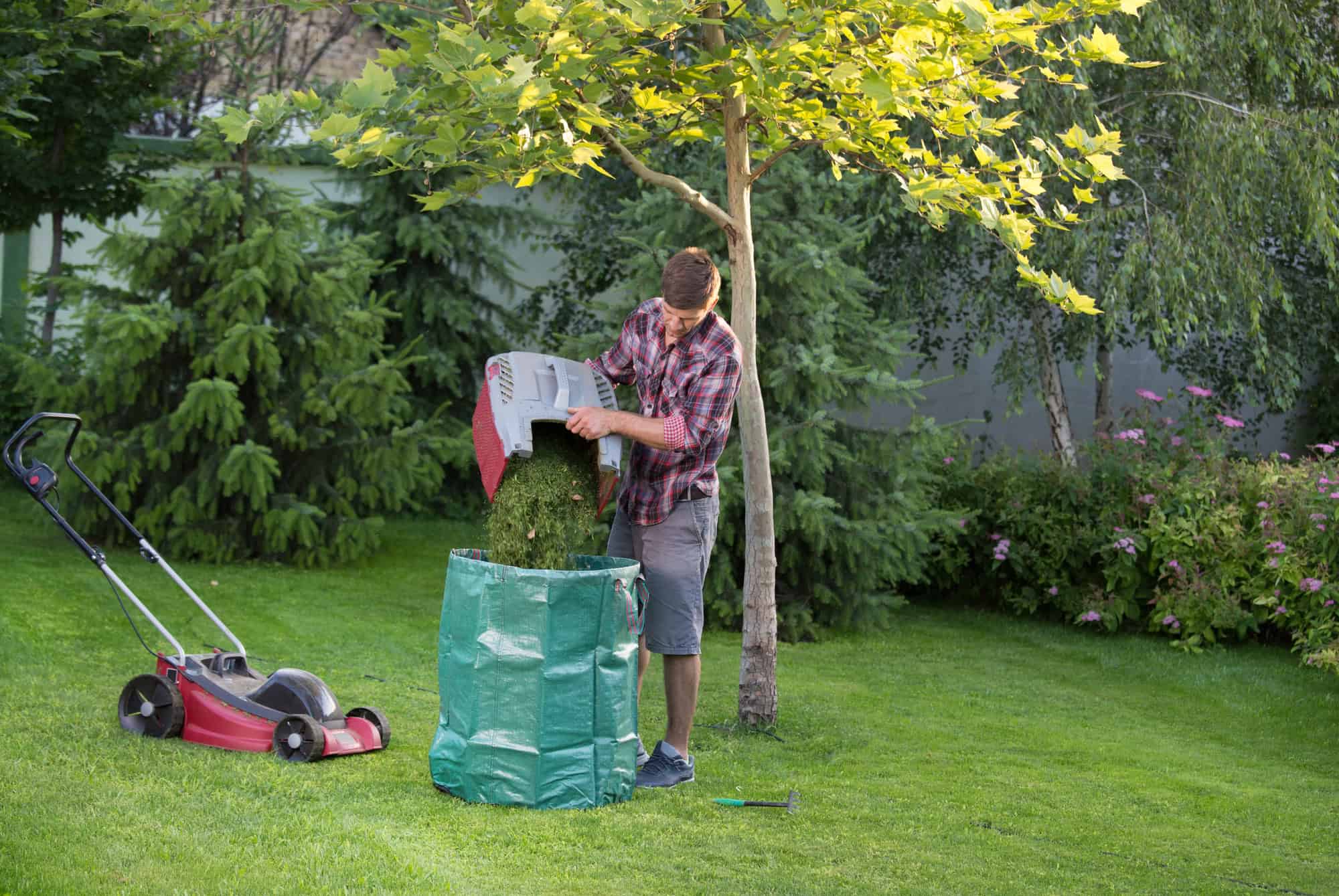
The smartest approach is not to pick one method forever but to match it to the lawn in front of you. For the regular weekly or twice-weekly cut on dry, healthy grass through spring and summer, mulch and let the clippings feed the lawn. When the grass has grown long after a holiday or a wet spell, fit a standard blade and bag it, because trying to mulch that volume only buries the lawn under clumps. And when you do bag, those clippings are far too good to bin: a few centimetres of fresh grass added to a compost heap, balanced with drier brown material like cardboard, dead leaves or straw to stop it turning into a slimy mat, breaks down into rich compost you can spread back on the garden.
Thought of this way, the mulching blade is one tool in a small kit rather than a single answer. It earns its keep on the routine cuts that make up most of the mowing year, quietly returning nitrogen and moisture to the soil and saving you bags of work, while a standard blade stays on the shelf for the heavy, wet and overgrown days. Keep both sharp, switch between them as the conditions demand, and you get the cleanest finish and the healthiest lawn the mower is capable of, whatever the week throws at you.