The mower has done a couple of months of mowing already, the grass is growing faster than it will at any other point in the year, and the first real heatwave of summer is probably within a fortnight. The mower has not failed yet, but small things are wearing out and a 45-minute service now is the difference between a tool that runs cleanly through August and one that strands you on the worst possible day.
The full pre-summer service comes down to seven checks, all of which can be done with basic tools and a litre of fresh oil. The benefit is not just reliability. A mower in good service uses less fuel, cuts more cleanly, leaves a sharper finish on the lawn, and lasts five to ten years longer than one that is run hard without attention.
The Safety Step That Has to Come First
Before doing anything else, disconnect the spark plug lead on a petrol mower or remove the battery on an electric one. A lawn mower blade can spin if the engine is barred over by hand, and a finger underneath a deck when that happens ends in surgery. Lean the mower onto its side with the carburettor and air filter facing upwards, never down, or fuel and oil will leak into the air filter and ruin it.
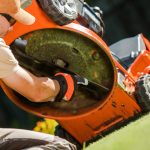
Wear gardening gloves throughout. The underside of the deck after a season of mowing is a layer of caked grass, occasional stones, and a steel blade that is still sharp enough to cut bone even when too dull to cut grass cleanly. Lay the mower onto an old towel or piece of cardboard to catch debris.
Cleaning the Underside of the Deck
This is the single most overlooked maintenance task and arguably the most important. A layer of compacted grass on the underside of a rotary deck disrupts the airflow that lifts the grass blades before cutting, which means the mower starts to tear rather than cut, the engine works harder to turn the blade, and the deck loses 10 to 20 percent of its cutting efficiency. Wet grass clippings packed against steel also accelerate rust, and within two seasons a neglected deck will develop holes that compromise the airflow further.
Scrape the underside with a putty knife or paint scraper until you can see clean steel. A wire brush handles the stubborn corners. Hose the deck off, dry it with a rag, and spray the underside lightly with WD-40 or a similar light oil to slow future rust. The whole job takes about 15 minutes and noticeably improves the cut on the next mow.
Sharpening or Replacing the Blade
A blade should be sharpened every 20 to 25 hours of mowing, which for a typical home garden works out to once or twice a season. By late May the spring growth flush has put serious work through the blade, and the edge will be noticeably dulled even if the mower is still cutting acceptably. A dull blade tears the grass tips rather than slicing them, leaving a ragged finish that turns brown within 24 hours and is more vulnerable to fungal disease. Look at the lawn the morning after mowing: if the cut blade tips are pale and frayed rather than clean and straight, the blade needs sharpening.
Remove the blade with a socket wrench. Most rotary blades use a 14, 15, or 17mm bolt depending on the mower. Mark the underside of the blade with a permanent marker before removal so you reinstall it the right way up. Clamp the blade in a bench vice and run a flat metal file along the existing cutting edge at the original angle, usually around 30 degrees. Five or six firm strokes per side restore the edge. Do not aim for a razor edge. A blade that is sharp enough to slice paper is sharp enough; sharper than that and the edge dulls again within an hour of mowing.
Balance the blade after sharpening. Hang it horizontally on a nail through the centre hole. If one end drops, file a little more from that side until the blade hangs level. An unbalanced blade vibrates at speed, hammers the engine crankshaft bearing, and is the single most common reason for a mower engine failing within five years of purchase. A dedicated blade balancer cone costs around £5 ($6) and is a worthwhile addition to the toolbox.
If the blade has nicks deeper than 3mm (about an eighth of an inch), file marks where stones have struck, or visible bending, replace it. Replacement blades for most consumer mowers cost £10 to £25 (about $12 to $30) and are available at Amazon, Screwfix, or the manufacturer’s website. Honda and Hayter offer genuine replacement blades; aftermarket blades from Oregon and similar manufacturers are slightly cheaper and perform identically for the home user.
Oil, Filter, and Spark Plug
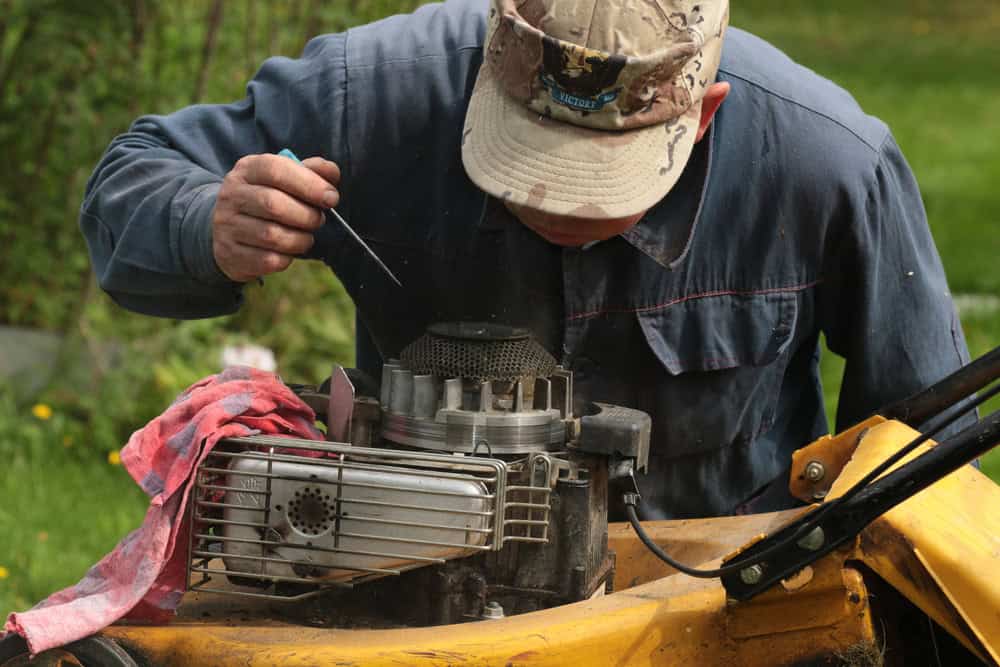
Oil is the single biggest factor in long-term engine life. Most consumer petrol mowers run an air-cooled four-stroke engine of 140 to 200cc displacement, holding around 500 to 600ml (17 to 20 fluid ounces) of oil. The interval to change oil is once per year or every 25 to 50 hours of use, whichever comes first. By late May most home mowers have done 15 to 25 hours and the oil is overdue.
Drain the oil with the mower tilted carburettor-side up, draining from the dipstick tube or the dedicated drain plug. Catch the oil in an old jug for proper disposal at a local recycling centre. Refill with the grade specified in the manual. For summer use, SAE 30 single-grade oil is the traditional choice and works well above 4 degrees C (40 degrees F). For mowers that also see autumn use, 10W-30 multigrade is more forgiving in cooler weather and acceptable to almost all manufacturers. Briggs and Stratton lists 18 to 20 ounces (530 to 590ml) as typical for their walk-behind engines; check the dipstick after filling and stop at the upper mark.
The air filter restricts dust and debris from reaching the carburettor. A blocked filter chokes the engine, causing rough running, hard starting, and reduced power. Paper filters can be tapped against a hard surface to dislodge loose dust and inspected against a light: if you cannot see light through the paper, replace it. Foam filters can be washed in warm soapy water, squeezed dry, then lightly soaked in fresh engine oil and squeezed again before refitting. A replacement paper filter for a typical Briggs and Stratton or Honda engine costs around £6 to £10 ($8 to $12) and lasts two to three seasons.
The spark plug should be replaced once a season or whenever the mower starts to misfire. Remove the plug with a deep-socket spark plug spanner, check the electrode for white deposits (indicating lean running) or black sooty deposits (indicating rich running), and inspect the gap with a feeler gauge. Most small engines require a gap of 0.7 to 0.8mm (0.028 to 0.030 inches). Replacement plugs cost £3 to £6 ($4 to $8). NGK and Champion are reliable brands; the original equipment plug specified in the manual is always a safe choice.
Fuel, Cables, and Wheels
If the mower has been running on the same tank of petrol since April, the fuel is starting to degrade. Petrol oxidises and absorbs moisture from the air over six to eight weeks, particularly the ethanol blends sold in most retail forecourts. Drain old fuel, run the carburettor dry by letting the engine idle until it cuts out, and refill with fresh petrol. Add a stabiliser like STA-BIL or Briggs and Stratton Advanced Formula Fuel Treatment (around £8 to £12, or $10 to $15 for a small bottle) if the mower will sit between uses for more than two weeks.
Check the throttle, choke, and drive cables for stiffness or fraying. A few drops of light penetrating oil at each cable end usually restores smooth movement. Self-propelled mowers benefit from a tiny smear of grease on the drive gears under the rear axle cover, and a fresh adjustment of the drive cable tension so the wheels engage cleanly when the bail handle is pulled.
Spin each wheel by hand. Bearings should turn smoothly without grinding. Plastic bushings on the cheaper consumer mowers wear out over time and cause the deck to drop on one side, leading to uneven cuts. Replacement wheels cost £8 to £20 (about $10 to $25) per pair and are a five-minute swap.
Battery, Charger, and Cordless Mowers
If you run a cordless mower, the pre-summer routine is shorter but equally important. Inspect the battery contacts for corrosion and clean them with a dry cloth or a soft brass brush. Test the battery to full charge and run the mower for 10 minutes to confirm runtime has not degraded badly over winter storage. A lithium-ion battery that loses more than 25 percent of its rated runtime after three years is approaching replacement. Original equipment batteries for the major systems (EGO 56V, Bosch 18V Power for All, DeWalt 18V) cost £80 to £200 (about $100 to $250) depending on capacity.
Clean the underside of the deck and sharpen the blade exactly as for a petrol mower. The cutting action and the build-up of debris are identical.
The whole service takes around 45 minutes and costs £15 to £30 (about $20 to $40) in oil, plug, and small parts. The reward is a mower that starts on the first pull through July, cuts cleanly when the grass is at its toughest, and lasts another five to ten years before needing serious money spent on it.