The first fortnight of June is the moment most lawns either pull ahead for summer or quietly start losing condition. Soil temperature has settled above 12 degrees C (54 degrees F), the grass is in its highest growth gear of the year, and any small problem you ignore now (a sharp drop in mowing frequency, a missed feed, a fungal patch the size of a saucer) tends to become a large problem six weeks later when the heat arrives. Treat the first two weeks of June as a focused setup period and the rest of the season runs on autopilot.
What follows is the order the work needs to happen in, with the reasoning behind each step, so you can adapt it to your own garden rather than blindly copying a checklist.
Mow Twice Weekly and Drop the Blade Carefully
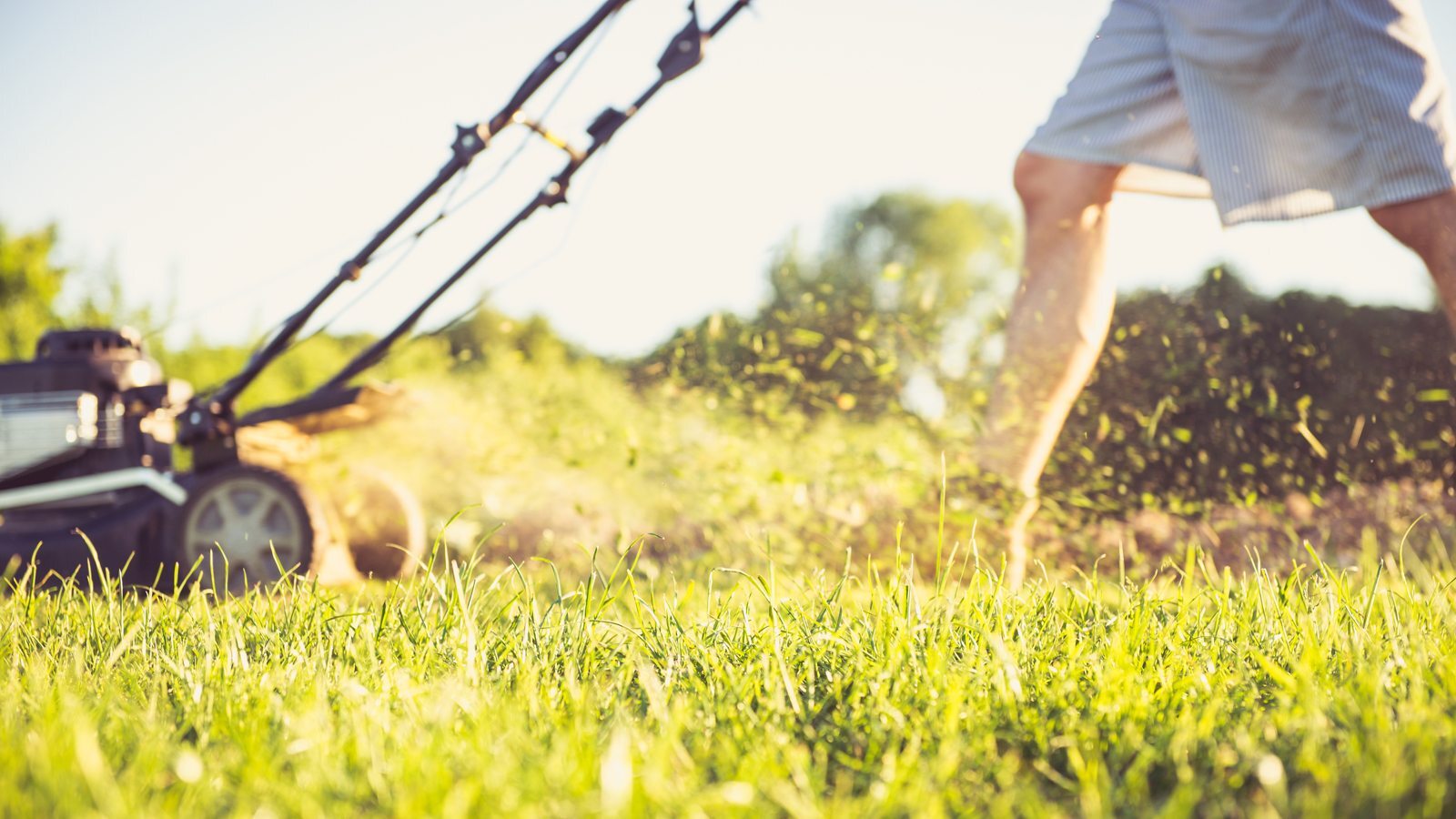
Late spring growth peaks in early June. Cool-season grasses like ryegrass, fescue and bent are still pushing leaf at full speed, while warm-season grasses such as bermuda and zoysia have switched on. The Royal Horticultural Society advises mowing established lawns once a week through summer, dropping to once a fortnight in drought, but in early June twice a week often gives a better finish because growth is still racing.
The rule that decides everything is the one-third rule. Never remove more than a third of the leaf in a single pass. Photosynthesis happens almost entirely in the top portion of the blade, and if you cut more than a third the grass has to use stored carbohydrates from the roots to push out new leaf. That weakens the root system, thins the sward, and lets weed seeds find space.
For a utility lawn aim for a finished height of 25-30mm (1-1.2 inches). For a fine ornamental lawn 12-15mm (0.5-0.6 inches). If your lawn is still at 50-60mm (2-2.4 inches) because you skipped mowing in late May, do not chop it down to summer height in one go. Take it down by one-third, wait three to four days, mow again at a lower setting, then a third pass takes you to summer height by the end of the first June week.
Sharpen the blade now if you have not done it this year. A blunt rotary blade tears the grass instead of cutting it, leaving ragged white wound sites that lose moisture, brown off in dry weather and act as entry points for fungal disease. A sharp blade gives a clean shear and the lawn looks visibly greener within 48 hours. A replacement blade for most 40-46cm push mowers costs around £12-18 or $15-22 from Amazon, B&Q, Home Depot or Lowe’s, and swapping it takes 10 minutes with a socket spanner.
Feed Once at the Start of the Fortnight
A spring feed applied in March or April will be running out by early June. If you have not fed since spring, apply a summer-formulation feed in the first week. The nitrogen drives the leaf you want for thickness and colour without forcing the heavy growth surge a spring feed produces.
Miracle-Gro EverGreen Premium Plus Lawn Food (around £18 or $22 for 200m2, available at B&Q, Wilko, Amazon, Home Depot) is a balanced 22-5-5 formula designed for late spring and summer. For a gentler organic option, Westland SafeLawn Natural Lawn Feed (around £14 or $17 for 150m2) is a 6-1-3 product safe for pets and children to walk on 15 minutes after watering in.
Apply at the rate printed on the box, typically 35g per square metre for granular feed. For a 50m2 front lawn that is 1.75kg, which is one of the dose scoops most boxes include. If no rain falls within 48 hours, water it in. Granular feed left dry on a warm day can scorch the grass.
Why feed at the start of the fortnight and not the middle? Nitrogen takes seven to ten days to push the first visible green-up, so feeding on day one means you see the result by the time you are doing your second mow. If you feed and immediately get a heatwave, hold off and water deeply first.
Get Ahead of Drought, Not Behind It
The early-June work that makes the biggest difference is the preparation for hot weather. Drought damage is far easier to prevent than to repair.
Water deeply once a week, not lightly every day. Deep watering means 15-20mm (about 0.6-0.8 inches) in one session, which is roughly 15-20 litres per square metre. This drives roots downward as they chase the moisture. Shallow daily watering keeps roots in the top 2-3cm of soil where they fry the moment the surface dries out.
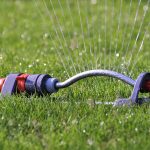
A simple test: place an empty tuna tin on the lawn while the sprinkler runs. When the tin has 15mm of water in it, you have applied enough. Most sprinklers take 45-60 minutes to deliver that much over a 5m radius.
Apply a wetting agent before the first hot spell. Soil that has dried out becomes hydrophobic, meaning water beads on the surface and runs off instead of soaking in. A liquid wetting agent (around £15 or $18 for 500ml, treats 200m2) breaks surface tension and lets water reach the root zone. Apply with a watering can and rinse in. This single step often makes more difference in a heatwave than any amount of extra watering.
Raise the mower by one notch in week two. Longer grass shades the soil, slows evaporation, and develops deeper roots. A lawn cut at 40mm (1.5 inches) survives drought better than one cut at 20mm (0.8 inches) because each blade has more chlorophyll to keep the plant alive and more leaf area to insulate the soil.
Spot Treat the Three June Problems
Three issues turn up in the first half of June with almost timetable reliability.
The first is red thread, identified by thin pink threads or salmon-coloured patches across the lawn. It is a sign of low nitrogen, not poor lawn care. A summer feed almost always clears it within two weeks because the grass simply outgrows the fungus.
The second is lawn rust, an orange-yellow powder that brushes off onto your shoes or trouser legs after mowing. Caused by Puccinia fungi and triggered by warm, humid nights, the fix is the same as red thread: nitrogen plus deep watering in the morning so blades dry through the day.
The third is surface-feeding weeds like daisies, clover and plantains. These have rooted in by now and a single contact-only spray will not finish them. Use a selective lawn herbicide containing dicamba and MCPA such as Westland Resolva Lawn Weedkiller (around £16 or $20 for 1L concentrate, treats 200m2). Apply on a dry, still day when no rain is forecast for 24 hours. The selective chemistry kills broadleaf weeds without harming grass because it interferes with auxin growth hormone pathways that only dicotyledonous plants use.
The Common Mistakes That Wreck June Lawns
The first is scalping. Trying to drop mowing height from spring to summer in one cut shocks the plant and leaves yellow patches that take three weeks to recover. Always step down in three passes.
The second is feeding right before a heatwave. Granular feed on dry, warm grass scorches in 48 hours. Either feed when rain is forecast or water it in straight away.
The third is mowing wet grass after rain. The blades smear, the cut is ragged, and the clippings clump into windrows that suffocate the grass underneath. Wait until the grass is dry to the touch.
The fourth is shallow daily watering. Twenty minutes with the sprinkler every evening keeps roots in the top 3cm and guarantees a struggling lawn the moment you go on holiday. One deep soak per week is always better.
Get the first two weeks of June right and the lawn carries itself through July and August with very little intervention. Skip the preparation and you spend the rest of summer chasing problems you could have prevented in a single Saturday.