If your lawn looks tired in late May despite regular feeding, watering, and mowing, the answer is probably hiding three inches below the surface. Compacted soil is the most underdiagnosed lawn problem in any garden, and it cannot be fixed with another bag of feed or a heavier watering can. The grass roots are starved of oxygen, the soil is too dense for water to reach them, and no amount of surface treatment will change that. The good news is that you can correct it in an afternoon, and late May is one of the two best windows in the year to do it.
Soil compaction happens when air pockets in the upper soil layer get squeezed out. Walking the same route across the lawn, dragging a heavy mower over the same lines week after week, children playing on the same patch, a paddling pool sitting in one spot all summer, even heavy rain on already-tight clay soil all push soil particles closer together. Once those particles are tightly packed, water runs off instead of soaking in, oxygen cannot reach the root zone, and the soil microorganisms that release nutrients into the soil suffocate and die off. Grass roots are aerobic. They need oxygen at the root tips to grow, and in compacted soil they simply stop extending. The plant survives on whatever shallow root mass it already has, which is why a compacted lawn looks reasonable in mild weather and then collapses the moment summer heat arrives.
The Tests That Tell You If Your Lawn Is Compacted
The simplest test costs nothing. After heavy rain, walk across the lawn and look for puddles that sit on the surface for more than an hour. Healthy lawn soil should drain quickly. If you see standing water, or if the water disappears only because it runs off down the slope rather than soaking in, the soil below is too tight to accept it. Lawn care professionals call this the puddle test, and it is the most reliable indicator of compaction in any garden.
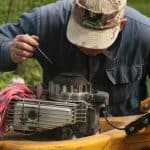
The screwdriver test is even more telling. Push a long flat-blade screwdriver, about 15cm (6 inches), into the lawn. In healthy soil with good structure, the blade slides in with steady, modest resistance, like pushing into firm cheese. In compacted soil, you will feel a clear stopping point, usually around 5cm (2 inches) down, and the blade will not go further without you leaning your full body weight on it. That stopping point is the compaction layer. Below it, the roots cannot reach.
Other signs are subtler but tell the same story. Moss returning quickly after treatment is a classic compaction symptom because moss thrives in low-oxygen, damp surface conditions where grass roots cannot compete. Thinning grass on pathways or pet routes, areas that turn brown first in dry weather, and weeds like plantain, knotweed, and creeping buttercup all favour compacted ground. Plantain in particular is so tightly linked to compaction that lawn care professionals use it as a diagnostic indicator before they even put a fork in the soil.
Hollow Tine vs Solid Tine: Which You Actually Need
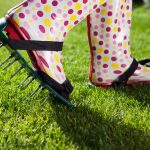
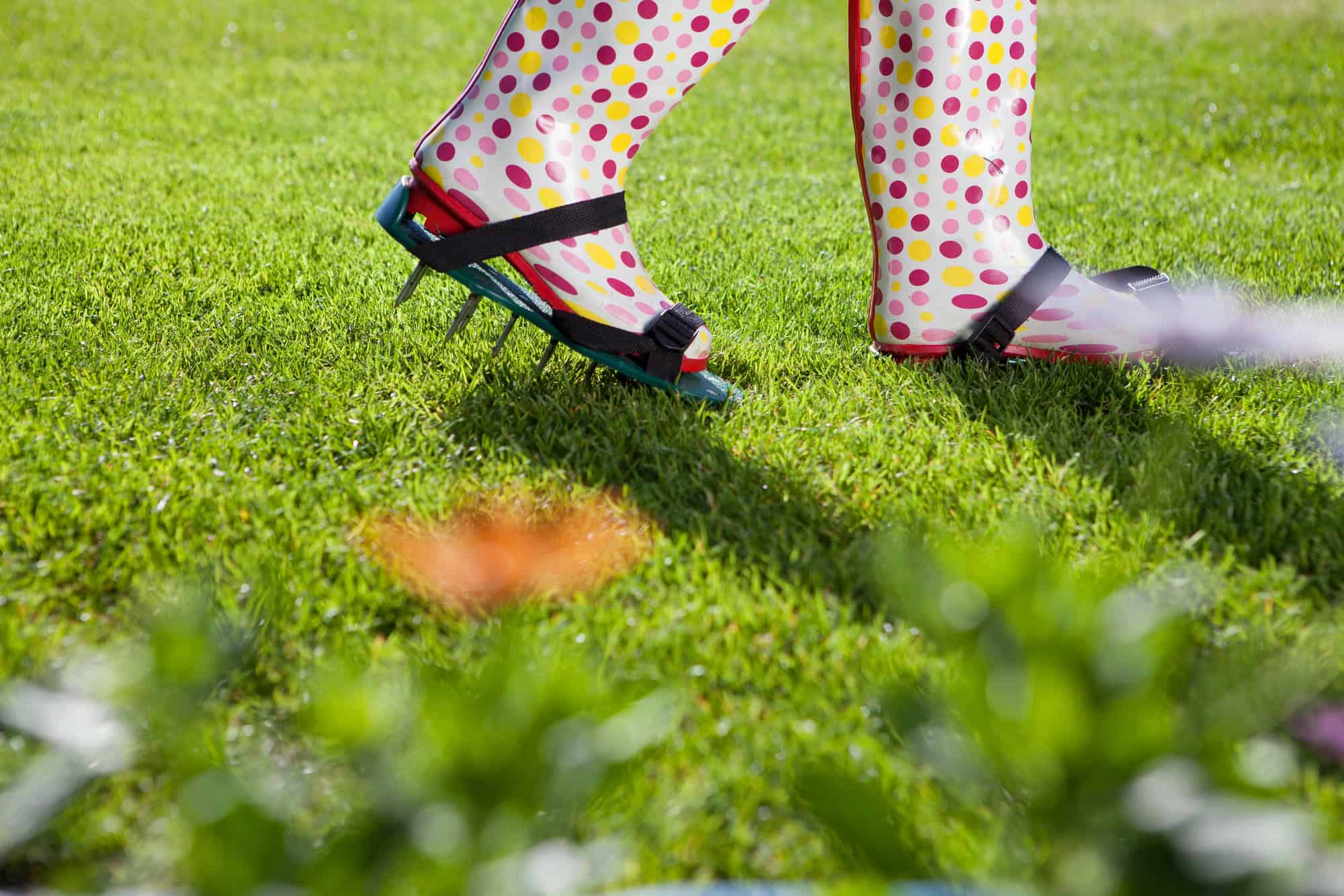
There are two ways to mechanically aerate a lawn, and they do very different jobs. Solid tine aeration pushes spikes into the ground, opening holes by compressing the soil sideways. It is fast, easy, and useful for moderately firm lawns, but on badly compacted soil the spike simply makes a temporary slit that closes back up within weeks. Hollow tine aeration pulls a small plug of soil and thatch out of the ground, leaving an open core that takes much longer to refill. For seriously compacted soil, hollow tine is the only real fix.
For small lawns under 100m2 (about 1,000 square feet), a hand tool will do the job. The Wolf-Garten Multi-Change Hollow Tine Aerator costs around £35/$44 and pulls cores up to 6cm (2.5 inches) deep. It connects to the Wolf-Garten interchangeable handle system, so if you already own any Wolf-Garten tools you only need the head. A garden fork pushed straight down and rocked back to widen the slot works too, but only as solid tine aeration. It does not extract soil, so it is best for light surface compaction rather than the heavier stuff.
For larger lawns, a rolling hollow tine aerator with foot bar saves your back. Yard Butler makes a manual coring aerator that retails around £55/$70. A petrol-powered aerator like the Mountfield ME2515M is closer to £400/$500, which is hard to justify for a single garden but worth considering if you share one with neighbours or hire one for a weekend. Hire rates are typically £40-60/$50-75 per day at most tool hire shops.
How to Actually Do It
The soil needs to be moist but not waterlogged. Aerating bone-dry soil is hard work and the tines will not penetrate. Aerating sodden soil just smears the sides of the holes and makes things worse. The day after a moderate rain, or 24 hours after a long deep watering, is the sweet spot. Press the tines straight down to their full depth, lift cleanly, move 10-15cm (4-6 inches) and repeat. For badly compacted areas, go over them twice at right angles, so you end up with holes in a tight grid pattern roughly 7cm (3 inches) apart.
The cores you have pulled up are not rubbish. Let them dry on the surface for a day or two, then break them up with the back of a rake and brush the dry soil back into the holes along with a top dressing of sandy lawn loam. A typical top dressing mix is 70% sand and 30% screened topsoil with a little sieved compost. Spread it at about 3kg per square metre (just over 6lb per square yard), then drag a stiff broom or the back of a rake across the lawn to work it into the holes. The sand keeps the holes open as the soil settles, which is the whole point of the exercise.
Finish with overseeding. Aeration opens perfect little seed pockets, and grass seed dropped into a fresh hollow tine core germinates faster and more reliably than seed scattered on bare ground. A shade-tolerant fescue and dwarf ryegrass mix sown at 25g per square metre fills in the thin patches as the grass recovers. Two to four weeks later, apply a balanced summer feed at the rate printed on the box to give the new growth fuel for the rest of the season.
The Mistakes That Make Things Worse
The biggest mistake is rolling the lawn after aerating. Some gardeners still believe a heavy roller smooths a lawn for the summer, but rolling is the single most effective way to recompact what you have just opened up. Skip the roller entirely. If you have small surface bumps, top dress them out over a few months rather than crushing the soil flat.
The second mistake is aerating then mowing extremely short. The grass has just been through mechanical stress and needs leaf area to photosynthesise and rebuild. Set the mower to 35-40mm (about 1.5 inches) for the next three weeks and remove no more than a third of the blade length per pass. The third mistake is doing nothing and assuming the cores will sort themselves out. They will not. Brushing in a top dressing is what locks in the gains. Without it, the cores collapse within a few weeks and the lawn drifts back toward the same compaction it started with.
Late May aeration sets a lawn up for the worst weeks of summer. The roots can finally extend, water reaches them when you irrigate, and the grass can hold its colour through dry spells that would have turned the lawn straw-coloured a few weeks earlier. It is the single most overlooked lawn renovation step in any garden, and once you have felt the difference under your feet, you will never skip it again. For more on what to do alongside aeration, see our guides to topdressing in late spring and why thatch could be killing your lawn.