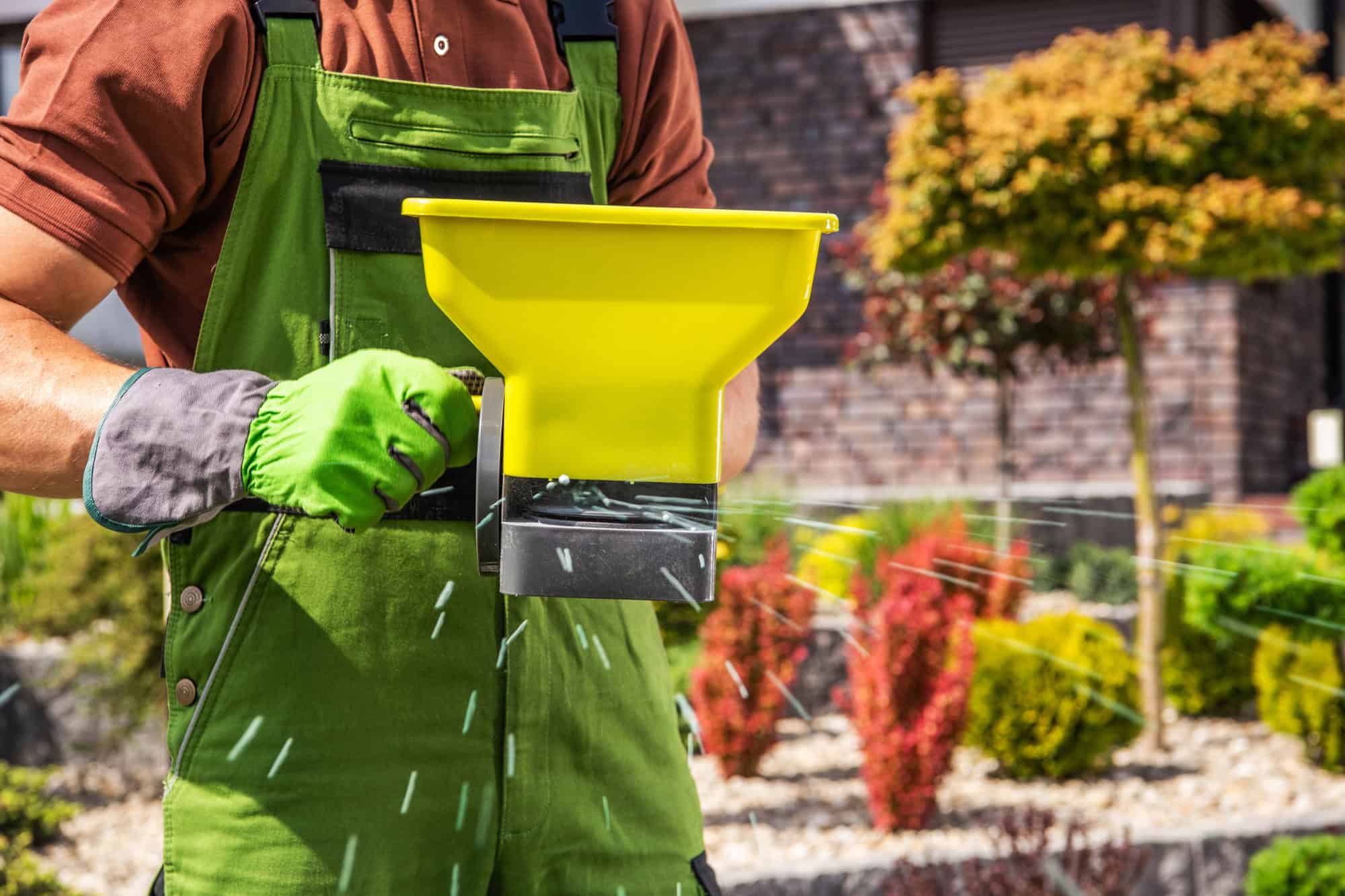
If the forecast shows a run of hot, dry days, the safest thing you can do for your lawn is put the granular feed back in the shed. Applying a standard high-nitrogen lawn fertiliser to dry, heat-stressed grass is one of the quickest ways to turn a green lawn into a patchwork of yellow and brown streaks within 48 hours. The damage looks like drought, but the cause sits in the bag you just spread. Feed when the grass is growing and the soil is moist, switch to a diluted liquid feed in a dry spell, and you avoid the problem entirely.
This is one of the most common mistakes gardeners make once summer arrives, partly because feeding feels like the helpful thing to do when grass looks tired. In hot weather it is the opposite of helpful. Understanding why turns a vague warning into a rule you will actually follow.
Why fertiliser scorches grass in hot, dry weather
Lawn fertiliser is made of mineral salts. Nitrogen is usually delivered as ammonium nitrate, ammonium sulphate, or urea, and each of these is a salt that dissolves in water. When you spread granules and the soil is moist, they dissolve into the water around the roots at a manageable concentration and the grass takes up the nitrogen it needs. The trouble starts when there is not enough water to dilute them.
Plant roots and soil exchange water by osmosis, which always moves water from where it is more dilute to where it is more concentrated. In a moist soil, the water inside the grass plant is roughly in balance with the water in the soil. Pile undissolved fertiliser salts onto a dry soil surface and you create pockets where the salt concentration outside the root is suddenly far higher than inside it. Osmosis then pulls water out of the roots and leaf bases and into the soil, the reverse of what the plant needs. The grass effectively dries out from the inside even if you water afterwards, which is why the result is called fertiliser scorch or salt burn. The blades go straw-coloured along the exact lines where the spreader ran, and in bad cases the crowns die and you are left reseeding.
Every fertiliser has a salt index, a number that describes how much it raises the salt concentration of the soil solution compared with an equal weight of sodium nitrate. Urea and ammonium-based quick-release nitrogen sit high on that scale, which is why cheap, fast-acting granular feeds are the worst choice in a heatwave. Products built around slow-release coated nitrogen or organic nitrogen release their salts gradually and carry far less scorch risk, but even those are not worth the gamble on parched ground.
The temperature and moisture limits to respect
Turf specialists give a consistent set of thresholds. Avoid applying granular feed when daytime temperatures are climbing above roughly 29 degrees C (85 degrees F), and avoid it during any prolonged dry spell when the soil is dry more than a couple of centimetres down. The combination of heat and drought is the dangerous one, because heat speeds up water loss from the leaf while dry soil removes the water that would otherwise dilute the salts.
A simple field test beats guessing. Push a screwdriver or a thin trowel into the lawn. If it slides in easily and comes out with damp soil clinging to it, there is moisture in the root zone and a gentle feed is tolerable. If it stops after a centimetre or two and comes out clean and dry, the soil is too dry to feed safely. Grass that has already turned blue-grey, lost its spring underfoot, or stopped growing is heat-stressed and dormant, and feeding dormant grass does nothing useful because the plant has shut down nutrient uptake to conserve water.
Timing within the day helps too. If you must apply a feed in warm weather, do it in the cool of early morning or evening, never in full midday sun, and water it in thoroughly so the granules dissolve and move down to the roots rather than sitting on the blades.
What to feed with instead during a dry summer
The answer in hot, dry weather is to switch from granular to a dilute liquid feed, or to a product that greens the lawn without forcing growth. Liquid feeds are already dissolved when you apply them, so there are no concentrated granules to scorch, and the nutrients reach the plant within a day or two through the leaf as well as the root.
A liquid seaweed such as Maxicrop Original (around 12 to 15 pounds / 16 to 19 dollars for a 1 litre concentrate, available at garden centres, B&Q, Amazon and most online suppliers) is the gentlest option. It is low in nitrogen, so it will not push soft growth in the heat, but it supplies trace elements and natural plant hormones that help grass cope with stress. Dilute it at the rate on the bottle, usually around one capful to a watering can, and apply in the evening. For a touch more colour without a growth surge, a liquid lawn feed such as Miracle-Gro Complete Concentrated Liquid (around 8 to 10 pounds / 10 to 13 dollars for a 1 litre bottle that treats a large lawn through a hose-end applicator) works well applied at half strength.
If your only goal is to green up a tired-looking lawn rather than feed it, iron in the form of sulphate of iron darkens the colour within days without adding nitrogen or driving growth, which makes it well suited to summer. Whatever you choose, water the lawn the evening before you apply anything, so the grass is hydrated and the roots are working when the nutrients arrive. For a fuller approach to keeping colour through a dry spell, our guide on using liquid seaweed through a dry summer goes into the dilution rates in more detail, and the same principles sit alongside good summer watering technique.
How to rescue a lawn you have already scorched
If you have spread feed and watched yellow streaks appear, act fast, because the salts are still in the soil pulling water from whatever roots survive. Water deeply and repeatedly to flush the excess salt down through the root zone and out of reach of the grass. Apply the equivalent of around 25mm (1 inch) of water over the affected area, then repeat daily for three to four days. The aim is to dilute and leach the salt, so heavy, soaking irrigation beats light sprinkling.
There is one trap that catches people out more than any other in summer, and most quick tip articles never mention it. Combined weed-and-feed products, the ones that promise to green the lawn and kill weeds in a single pass, are doubly dangerous in heat. They pair a high salt load of quick-release nitrogen with a selective weedkiller, and both stress the grass. Weedkillers work best when weeds are growing fast and the lawn is unstressed, which is the opposite of a hot, dry spell, so in summer a weed-and-feed risks scorching the grass while barely touching the weeds. Save those products for the mild, moist growth of spring and early autumn, and tackle summer weeds individually with a spot treatment instead.
Grass that is only tip-scorched will usually recover and grow out the damaged leaf within two to three weeks once the salt is flushed and cooler, wetter weather returns. Where the streaks have gone fully brown and the crowns are dead, you will need to rake out the dead material and oversow once temperatures ease in early autumn, since seed sown into hot, dry soil rarely takes. The lasting lesson is cheaper than the repair: read the weather before you read the back of the bag, and in a hot dry spell, feed light, feed liquid, or do not feed at all.
Get the timing right and feeding is one of the most powerful tools you have. Get it wrong by a single hot week and the same product that should have thickened your lawn will thin it instead. The grass cannot tell the difference between drought and a bag of salt sitting on dry ground, and neither response ends well, so let moisture and temperature, not the calendar or the urge to do something, decide when you feed.