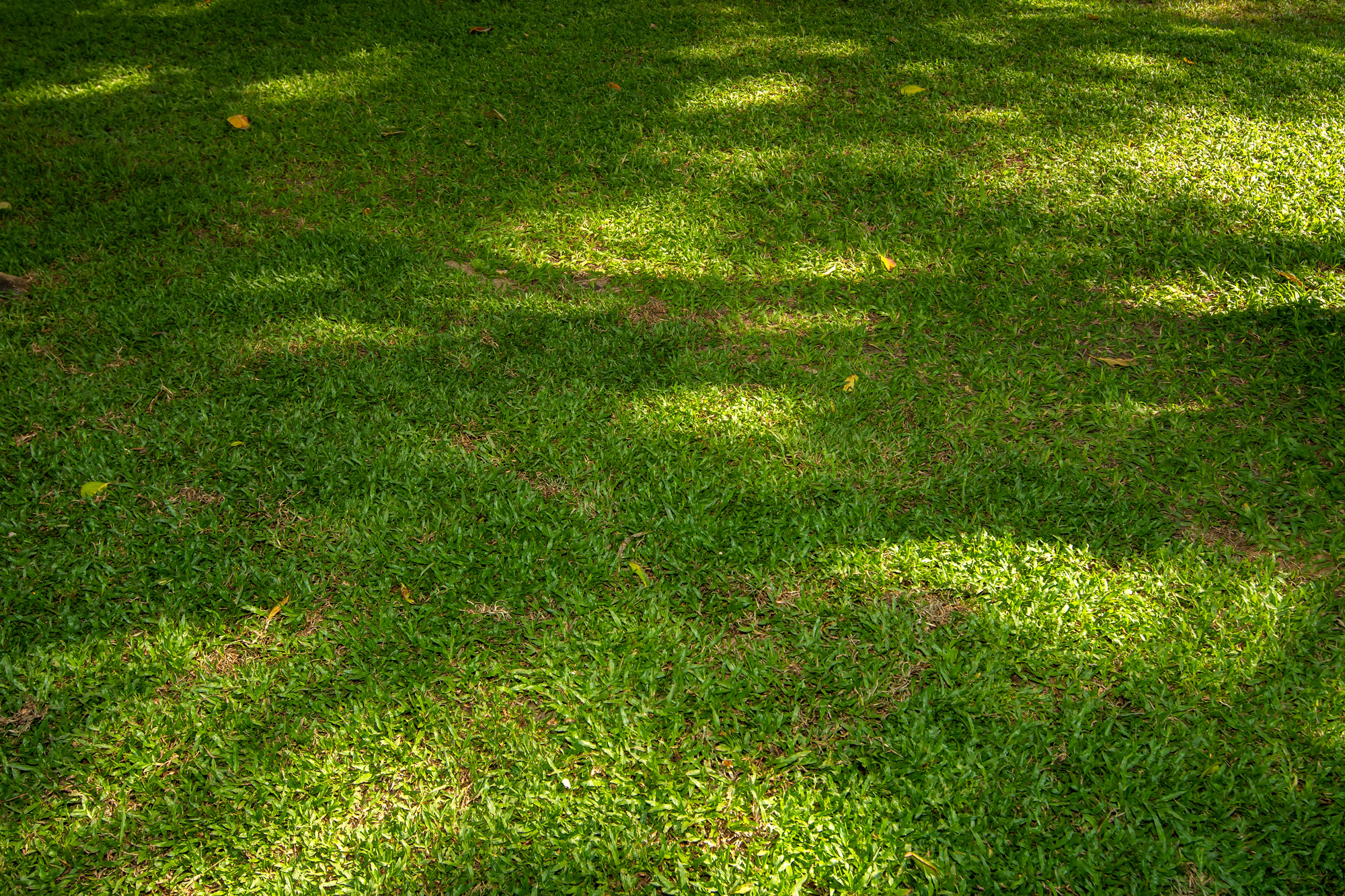
- Most lawn grasses want four to six hours of direct sun a day, and a thick tree canopy can block up to 95 per cent of it, so thin grass under a tree is a light problem, not a seed problem.
- The cheapest fixes come first: let more light reach the ground by thinning branches, keep a bare circle around the trunk, raise your mowing height to between 6cm (2.5in) and 9cm (3.5in), and feed in autumn before the leaves drop.
- In heavy shade no grass will thrive no matter what you sow, and the smarter move is to stop reseeding bare ground and plant something that likes the dark instead.
The Shade Is Starving the Grass, and Fresh Seed Will Not Change That
You reseed the patch under the tree every spring. By midsummer it is thin and pale, and by autumn it has gone back to moss and bare soil. It is tempting to blame the seed, or the mix, or yourself. The seed is almost never the fault. The grass is starved of light, and a new box of seed cannot fix that on its own.
The Royal Horticultural Society is blunt about the cause: “Most species of turf grass require four to six hours of full sun each day to grow well.” A dense canopy of oak, beech or conifer can cut out as much as 95 per cent of summer sunlight. Under that kind of cover, grass thins, weakens and hands the ground over to moss, which is perfectly happy in damp, dim corners where grass gives up.
So the fix runs in order of effort and cost. Let more light down to the lawn first. Then help the grass that is already there cope with the little it gets. Reseed only once the conditions have actually changed. Skip those first two steps and head straight for fresh seed, and you are throwing money at ground that cannot use it.
What the Grass Is Actually Short Of Under a Tree
Light is the first and biggest shortage. Grass runs on photosynthesis, and photosynthesis runs on light. Starved of it, grass blades grow long, thin and soft as the plant stretches upward hunting for the sun. Those weak blades flatten under the first footstep, tear easily and regrow slowly, so the patch never recovers between one walk across it and the next. The thinner it gets, the more light reaches the soil surface, and the more moss and weeds move into the gaps.
Light is not the only problem a tree creates. Its roots pull water and nutrients out of the top layer of soil, the exact zone grass roots depend on, so the lawn competes and loses. The ground under old trees is often compacted and slow to drain, which stops grass roots pushing down. And shaded soil tends to run low on the three nutrients grass needs most: nitrogen, phosphorus and potassium. Put those together and the grass under a tree is fighting on four fronts at once, which is why it fails so reliably.
Moss is the sign that tells you how far gone the spot is. A little moss is fine, and it keeps the ground green. It is only a problem when it crowds grass out entirely, and even then it is a symptom rather than the disease. Reach for a moss killer before you have dealt with the shade and the moss simply grows back, so treat the light first and the moss second.
Let More Light Reach the Ground First
The single most effective thing you can do costs nothing but a pruning saw and an afternoon: open up the canopy. Thinning branches lets more light fall on the grass without taking the tree down. Two jobs do most of the work. Crown lifting clears the lower branches off the trunk so light slants in under the canopy. Crown thinning takes out a share of branches throughout the crown so dappled light falls across the whole area beneath. On a large or mature tree this is a job for a qualified tree surgeon, who can tell you how much you can safely take without harming the tree or breaking the law, as many mature trees carry protection orders.
Then stop fighting the hardest ground of all. Keep a turf-free circle of at least 1m (3.25ft) around the base of the tree, and a wider one around a young tree. The ring closest to the trunk is the darkest, driest, most root-choked part of the whole plot, and grass there is a lost cause. Cover it with a layer of bark mulch instead, which looks tidy, holds moisture for the tree and saves you reseeding the same doomed strip twice a year. A bag of bark chips runs about 5 to 9 pounds (roughly 7 to 12 US dollars) for a 50 to 70 litre bag, and one bag covers a small tree ring.
If you are planting a new tree near a lawn and want to keep grass under it, pick one that casts light shade to begin with. A deciduous tree with an open, airy canopy such as birch, honey locust or robinia lets far more light through than a dense evergreen, and the grass underneath has a real chance. The same logic applies to overgrown shrubs and hedges that throw shade across the edge of a lawn: thin them back and the grass behind them revives.
Help the Grass That Is Left Hold On
Shaded grass grows slowly, so cut it less often and cut it higher. Raise the mower to at least 6cm (2.5in), and up to 9cm (3.5in) in the shadiest spots. A taller blade has more surface to catch the weak light that does get through, and it carries deeper roots that cope better with the tree stealing water below. It also shades the soil surface, which holds moss back. Always collect the clippings in a shady lawn rather than leaving them to mulch down. Clippings smother thin, struggling grass, trap damp against the surface and give moss exactly the conditions it wants.
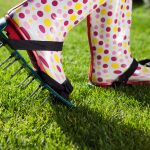
Deal with the compacted soil while you are at it. Push a garden fork straight down every 10cm (4in) or so and rock it gently to open the ground, or use a hollow-tine aerator to pull out plugs of soil and leave channels for air, water and roots. A decent border fork costs around 18 to 30 pounds (about 24 to 40 US dollars), and a hollow-tine hand aerator about 25 to 40 pounds (roughly 33 to 53 US dollars). Autumn, with soft, moist ground, is the right time to do it.
Feed, but feed with care. The main feed goes on in autumn, just before the tree drops its leaves, and it wants to be high in potassium, the nutrient that toughens grass up for winter and for the stress of living in shade. A box of autumn lawn feed costs roughly 10 to 20 pounds (about 13 to 26 US dollars) and treats a few hundred square metres. Come spring, feed again about a month before the tree comes into leaf, but use a spring feed at half the rate you would on a sunny lawn. Shaded grass cannot use a full dose, and overfeeding it forces soft, sappy growth that disease picks off.
Only once the light has improved is it worth reseeding, and then the mix is what counts. Choose a shade-tolerant lawn seed, which leans heavily on fescue grasses that handle shade, drought and poor soil far better than the usual ryegrass. For damp shade, pick a mix with more bent grass (Agrostis) in it. A 1 to 1.5kg box of shade seed costs around 6 to 12 pounds (about 8 to 16 US dollars). Under a deciduous tree, sow while the tree is bare, in late autumn or early spring, so the young grass gets its light window before the leaves close the canopy over again. Water the tree heavily but not often, which drives its roots down and deep rather than keeping them up near the surface where they rob the grass. Washing-up water, cooled and free of harsh cleaners, does the job and saves the tap.
When to Stop Fighting the Shade Altogether
There is a point where no grass wins, and knowing where that point is saves you years of wasted seed. In deep, permanent shade cast by a building, a large evergreen, a thick hedge or a dense old tree, even the toughest shade-tolerant grass keeps failing. The light simply is not there, and nothing you buy in a box changes the amount of sun that reaches the ground.
When you reach it, the no-cost win is to stop. Give up on grass in that one spot and plant things that want the dark: a sweep of shade-loving ground cover, ferns, or a bed of woodland planting under the tree. You lose a few square metres of lawn and gain a corner that looks deliberate instead of worn out. Keep flogging it with seed and you get the same result every year, a thin green haze in March, bare mud and moss by August, and a muddy patch that gets tracked across the kitchen floor every time it rains. Match the planting to the light you have, and the problem solves itself.
For more on keeping a healthy lawn through the colder months, see our guides to feeding your lawn in autumn and clearing fallen leaves off the grass.