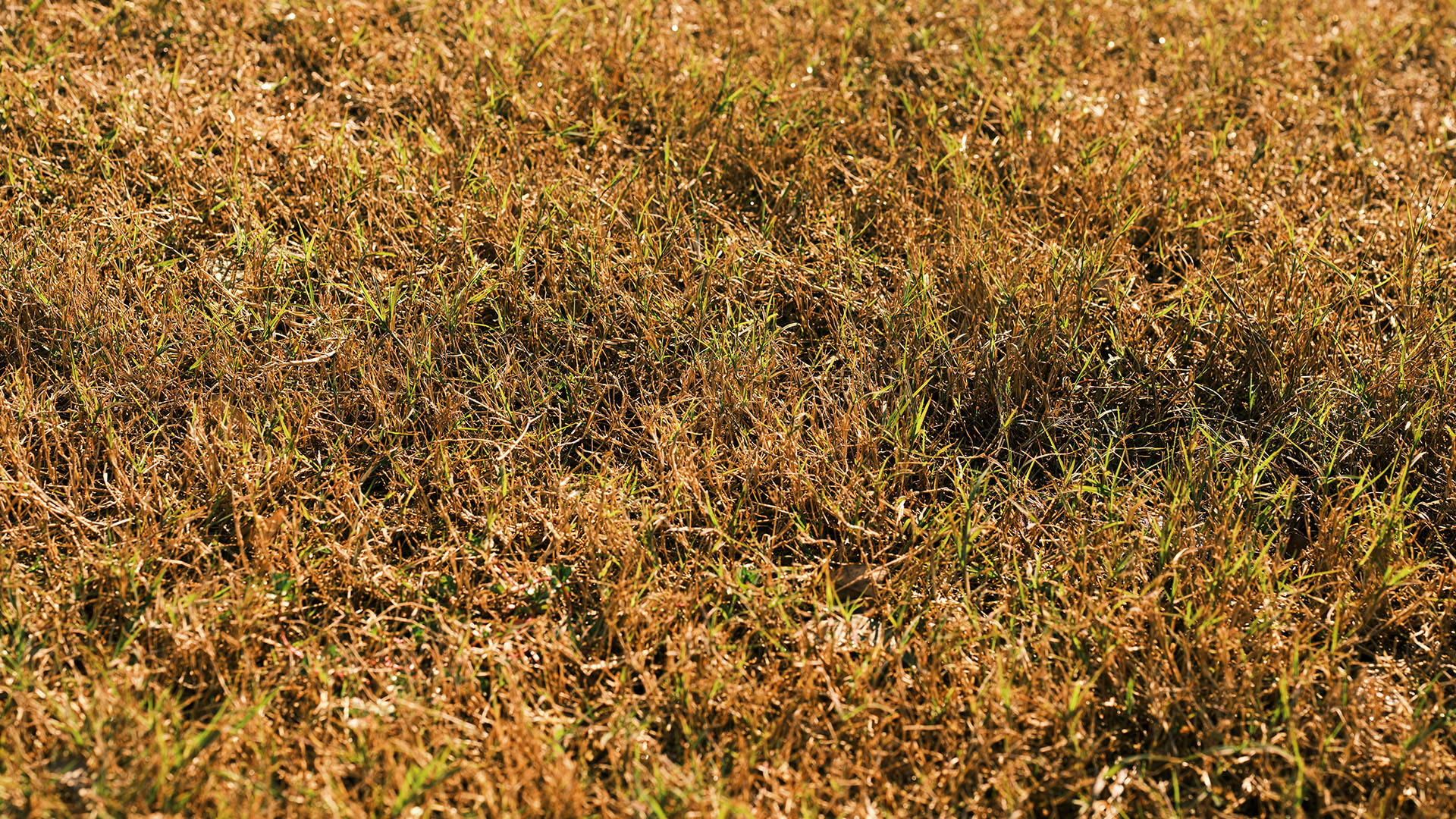
If your shoes pick up an orange-yellow dust every time you walk across the lawn, the grass is telling you something specific. That powder is fungal spores, not pollen, and it is the visible signature of lawn rust (genus Puccinia), the most common fungal disease to hit cool-season grasses in late spring and early summer. Catch it now and the fix is essentially free. Ignore it and the patches spread, the lawn thins, and you spend autumn rebuilding what you could have saved with a single feed.
This article walks through how to identify rust correctly, why it appears in the conditions that trigger it, the underlying biology that explains why the standard fix actually works, and the longer-term changes that prevent a return next summer.
How to Confirm It Really Is Rust
Several lawn problems look similar from a distance. To confirm lawn rust, get on hands and knees and look at the grass blades themselves. Three signs together confirm the diagnosis.
The first is small yellow flecks on the upper surface of the blade. These are the early-stage uredinia, the fungal pustules where spores form. They begin yellow and turn orange-red as they mature.
The second is the powder itself. Run a clean white tissue or kitchen paper across the affected area. If it comes back smeared rust-orange, you have rust. The powder is the urediniospores released when the pustules rupture, and they brush off blades onto anything that touches them: shoes, trousers, pet fur, mower decks.
The third is the pattern. Rust starts in irregular yellow patches rather than circles or rings. Patches sit in the warmer, less-mown corners of the lawn first, often on slopes that catch afternoon sun and stay humid into evening.
If you have all three signs, it is rust. According to Penn State Extension’s turfgrass disease guide, the genus Puccinia includes the species responsible for most lawn outbreaks. Kentucky bluegrass, perennial ryegrass and tall fescue are most affected. Bermuda, zoysia and centipede grass can also host rust species, though less commonly in suburban gardens.
Why It Appears When It Does
Rust needs three things to take hold: warm humid nights, slow-growing grass, and low nitrogen. The first two are weather. The third is the one you control.
Warm humid nights between 18-26 degrees C (65-79 degrees F) with leaf surfaces staying wet for six to eight hours create the conditions for spores to germinate. That is why rust spikes after a few muggy nights in late spring and early summer, especially following a stretch of dry weather that has stressed the grass.
Slow-growing grass is the second factor because rust completes its life cycle on the leaf in 10-14 days. If the grass is growing fast, the infected tips get mown off before spores release. If growth has slowed because nitrogen is low or the lawn is heat-stressed, the spores reach maturity and spread.
Low nitrogen is the limiting factor. The Royal Horticultural Society’s plant disease team and most turf science research from university extension services agree that rust is fundamentally a sign of underfed grass. When nitrogen runs out, leaf production slows, the existing blades thin and yellow, the immune response of the grass weakens, and the fungus moves in. Lawn rust prefers shade, heat, and humidity, but the actual prerequisite is low-vigour grass.
The Fix, and Why It Works in Two Weeks
The treatment for lawn rust is counter-intuitive if you think of it as a fungal infection. You do not need a fungicide for a typical garden case. You need to outgrow it.
Apply a quick-release nitrogen feed within the next seven days. Miracle-Gro EverGreen Premium Plus Lawn Food (around £18 or $22 for 200m2, available at B&Q, Home Depot, Amazon, Wilko) at 22-5-5 NPK is a strong choice because the high first number pushes leaf growth fast. Westland Aftercut All-In-One Lawn Feed Weed and Moss Killer (around £15 or $19 for 350m2) is another option if you also have surface weeds. Apply at 35g per square metre.
Water deeply once or twice in the morning after feeding, soaking to 15mm depth. Morning watering is important because rust needs prolonged leaf wetness to germinate. Watering in the evening leaves blades wet through the night, which is exactly what the fungus wants. Morning watering lets the blades dry through the day.
Raise the mower height to 30-40mm (1.2-1.5 inches) and mow more frequently. Each mow physically removes infected leaf tips and the spores they carry. Bag the clippings rather than mulching back for the next three or four cuts, then return to mulching once the infection is clear. Dispose of bagged clippings in green waste, not compost, because rust spores survive composting in small piles.
The biological reason this works: rust is an obligate parasite that can only feed on living grass tissue. By forcing rapid new leaf growth, you replace infected tissue faster than the fungus can spread to it. By removing leaf tips at every mow, you physically remove spores before they release. Within two weeks you stop seeing orange powder on your shoes. Within three weeks the yellow patches have grown out and the lawn is uniformly green again.
For severe cases, especially on golf greens or expensive specimen lawns, a contact fungicide containing azoxystrobin (such as Scotts DiseaseEx, 4.5kg covers around 465m2, available on Amazon for around £55 or $69) controls rust for four weeks. For a normal back garden this is rarely needed and is overkill.
What to Change for Next Summer
Rust is a feedback signal that your annual feeding programme has a gap. The lawn ran out of nitrogen between your spring feed and the moment rust appeared, and the gap is usually six to eight weeks.
The fix is to apply three feeds per year rather than one or two. A spring feed in late March or early April pushes the first growth surge. A summer feed in late May or early June (when rust would otherwise appear) keeps nitrogen levels topped up through the hottest months. An autumn feed in mid-September with a low-nitrogen, high-potassium formula like Westland Aftercut Autumn All In One (around £15 or $19 for 200m2) hardens roots before winter.
Improve airflow and drainage in shaded corners where rust starts. Cut back overhanging shrubs by 30cm (12 inches) to let morning sun reach the lawn. If a particular corner stays damp until midday, that is your rust epicentre and the place where the disease will return every summer until the conditions change.
Aerate compacted areas in autumn. Compacted soil holds water at the surface and starves roots of oxygen. The grass grows poorly, runs short on nitrogen, and becomes susceptible. A hollow-tine aerator hired for half a day (around £40 or $50) addresses this for years.
Reseed thin areas with a rust-resistant cultivar. Modern perennial ryegrass cultivars like AberAvon, Aberzest and DLF ProMaster 90 are bred with rust resistance and germinate in 7-14 days at soil temperatures above 8 degrees C. Tall fescue blends like Barenbrug RPR also show strong rust tolerance and handle drought better than standard mixes.
The Mistakes People Make With Rust
The first is reaching for fungicide as the first response. Fungicide kills the current infection but does nothing about the underlying nitrogen deficiency, so rust returns within a month.
The second is mulching the clippings during an active outbreak. You are seeding the spores back into the lawn with every pass.
The third is watering in the evening because the morning feels too busy. Wet leaves overnight are the single biggest trigger and the easiest variable to change.
The fourth is ignoring it because the lawn still looks fine from the kitchen window. Rust at orange-powder stage has been active for at least 10 days, and the spores are spreading every time anyone walks across the grass. The earlier you intervene, the less ground you have to recover.
If you saw orange powder on your shoes this week, feed today, switch to morning watering tomorrow, and bag the next three cuts. The lawn will be visibly clear by the second week of June, and the change in mowing and feeding rhythm will keep rust away for the rest of the season.