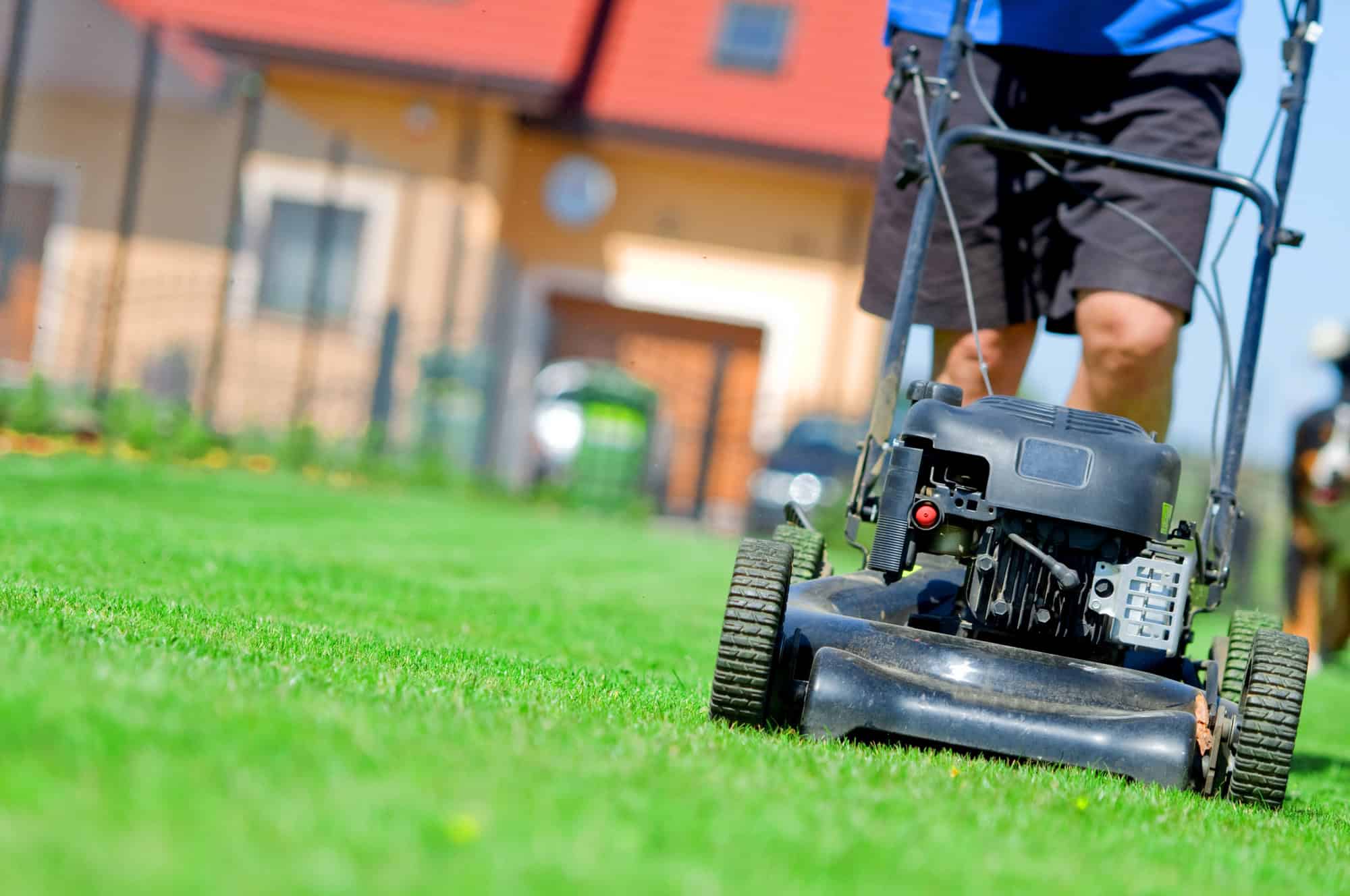
When a hot, dry spell is forecast, most people do one of two things with the mower, and both are usually a mistake. Some carry on cutting at the same low setting they used in spring, scalping the grass just as it needs every millimetre of leaf to defend itself. Others give up entirely and let the lawn grow into a shaggy meadow. The better answer sits between the two: raise the cutting height, cut less often, and only stop completely once growth has fully halted. Done properly, this single change is the difference between a lawn that turns straw-brown and dies in patches and one that goes dormant, holds its structure, and greens up within days of the first proper rain.
Raise the Blade and Slow Down Your Mowing
Before a heat spell, lift your cutting height in two stages rather than all at once. If you have been mowing a utility lawn at around 30mm (about 1.2 inches), take it up to 50mm (2 inches) at the next cut, then to 65mm (about 2.5 inches) a few days later. For a lawn made largely of fescue and ryegrass, a finished height of 50 to 65mm through the hottest weeks is sensible, and you can run it as high as 75mm (3 inches) on a coarse family lawn that takes heavy foot traffic. The reason for stepping up gradually is the one-third rule: never remove more than a third of the total blade length in a single pass. Cutting from 30mm straight to 65mm in one go would mean removing far more than a third, which shocks the plant and forces it to burn root reserves regrowing leaf at exactly the moment it can least afford to.
Mow less often as well. Grass growth slows sharply once soil dries and air temperature climbs, so the weekly or twice-weekly rhythm of spring no longer applies. Cut only when there is truly a third of new growth to take off, which in a dry June might mean once every ten to fourteen days. Always mow in the cool of early morning or evening rather than the middle of a hot day, because cutting creates fresh wounds across every blade and those wounds lose water fastest when the sun is at its strongest. A sharp blade is doing more work in summer than at any other time of year: a blunt blade tears rather than slices, leaving ragged, frayed tips that lose moisture and turn white within a day. If you cannot remember the last time you sharpened it, do it now.
Leave the clippings where they fall. Switching from collecting to mulching during a dry spell returns fine clippings to the surface where they shade the soil and slow evaporation, and as they break down they hand back nitrogen and moisture. The myth that clippings cause thatch does not hold for short summer cuttings, which rot away quickly. If your mower has a mulching plug or a mulch setting, this is the season to use it.
The Science of Why Tall Grass Survives Heat
The case for a higher cut rests on root depth, and root depth is what decides whether a lawn lives or dies in a drought. Turf research is consistent on this point: short mowing heights combined with frequent watering produce shallow-rooted plants that cannot reach moisture held deeper in the soil, while taller grass drives roots downward to tap reserves that shallow turf never touches. A grass plant kept at 65mm typically carries a root system two to three times deeper than the same plant scalped to 20mm. When the top few centimetres of soil bake dry, as they do within days of a heat spell, only the deep-rooted lawn can still draw water.
Taller blades also shade the soil surface. The Royal Horticultural Society advises raising the cutting height in dry conditions precisely because longer grass shields the ground, slows evaporation, and keeps the root zone cooler. That shade does a second job too: many weed seeds, crabgrass among them, need direct light on the soil to germinate, so a taller sward suppresses the very weeds that would otherwise colonise a thinning lawn. There is also a simple energy argument. Grass manufactures its food through photosynthesis in the upper part of the blade. Remove too much of that blade in hot weather and the plant has neither the leaf area to feed itself nor the spare energy to regrow, so it thins, browns, and opens gaps for weeds and moss.
This is also why a brown lawn in midsummer is rarely a dead lawn. Cool-season grasses protect themselves by going dormant, shutting down top growth and retreating to the crown and roots. A dormant lawn looks dead but is not, and a well-rooted one will recover within a week or two of decent rain. The taller you keep it going into the heat, the more reserves it has banked, and the faster that recovery comes.
When to Stop Mowing Completely
There is a point at which the right move is to put the mower away. Once growth has stopped, which you can confirm by the simple fact that the lawn has not got any taller in a week or more, there is nothing to gain by cutting and a lot to lose. Mowing a dormant, heat-stressed lawn does no useful work and creates fresh wounds and physical wear on grass that has no capacity to repair them. The wheels and your own footsteps also compress dry, brittle crowns, leaving tyre-track and footprint patterns that can take weeks to grow out once rain returns. If you must cross a dormant lawn, vary your route rather than walking the same line each time.
If you choose to keep a lawn green through the dry weeks rather than letting it go dormant, water deeply and rarely rather than little and often. A single soaking that wets the soil to 10 to 15cm (4 to 6 inches) once or twice a week trains roots downward, whereas a daily light sprinkle only dampens the surface and keeps roots shallow and vulnerable. A liquid seaweed tonic such as Maxicrop Original Seaweed Extract (around £11/$14 for one litre, which makes up to 200 litres of feed) will not green a lawn the way a nitrogen feed does, but it acts as a biostimulant that helps grass cope with stress and build root mass, which is exactly what a lawn needs going into a hot spell. Avoid heavy nitrogen feeds during a heat spell entirely, as forcing soft new growth in drought stress is a quick route to scorch.
Common Mistakes That Cook a Lawn in Summer
The most damaging mistake is the so-called tidy-up cut: dropping the height right down just before a hot weekend so the lawn looks neat and needs less attention. This removes the blade area the plant relies on for shade and food at the worst possible moment, and a lawn scalped on a Friday before a heat spell can be brown by Monday. The second mistake is watering a little every evening, which feels caring but trains roots to sit in the top centimetre of soil where they fry the moment you skip a day. The third is mowing at midday when both the grass and the operator are under the most heat stress, maximising water loss through every cut blade.
Get it wrong and the consequences are concrete rather than vague. A scalped, shallow-rooted lawn does not simply pause; it dies in patches, and dead patches do not recover with rain the way dormant grass does. They have to be reseeded in autumn, which means scarifying, overseeding, and weeks of watering-in to repair damage that a higher blade and a longer mowing interval would have prevented for free. The autumn after a hard, dry summer is the ideal time to renovate and overseed in any case, but there is a clear difference between topping up a lawn that went dormant and rebuilding one that was killed by mistakes made with the mower. For more on keeping a lawn alive through the hottest weeks, see our guides on drought-proofing your lawn before the heat arrives and how to water a lawn properly.