If wasps have started working over your lawn this month, the first thing to know is that most of them are not interested in you at all. They are feeding, hunting or house-hunting, and once you work out which of those three jobs they are doing, the problem becomes far easier to fix. A lawn that suddenly draws wasps in July is usually telling you something specific about what is living in the grass, what is flowering in it, or what has moved in underneath it. Deal with the cause and the wasps move on within days.
Wasps switch their behaviour sharply in high summer. Earlier in the year the workers spend their time catching aphids, caterpillars and grubs to feed the growing larvae back in the nest. Those larvae repay the favour with a sugary secretion the adults live on. By mid to late summer the queen has stopped laying, the larvae are gone, and thousands of adult workers are left with a sweet tooth and nothing to feed. That is the point at which they start scouring lawns, flower beds and picnic tables for any sugar they can find. Understanding that shift explains almost everything you are seeing.
The Three Reasons Wasps Work a Lawn in Summer
The most common draw is honeydew. Aphids, and to a lesser extent scale insects and leafhoppers, feed on plant sap and excrete the excess as a fine sticky film of sugar. That film lands on grass blades sitting under an infested tree or shrub, and on the leaves of any sap-sucking colony in the lawn itself. Wasps mop it up like a free buffet. If your lawn sits under a lime, sycamore, cherry or rose that is dropping a shine onto the grass, honeydew is almost certainly the answer. Run a finger across a blade in the affected patch; a tacky residue confirms it.
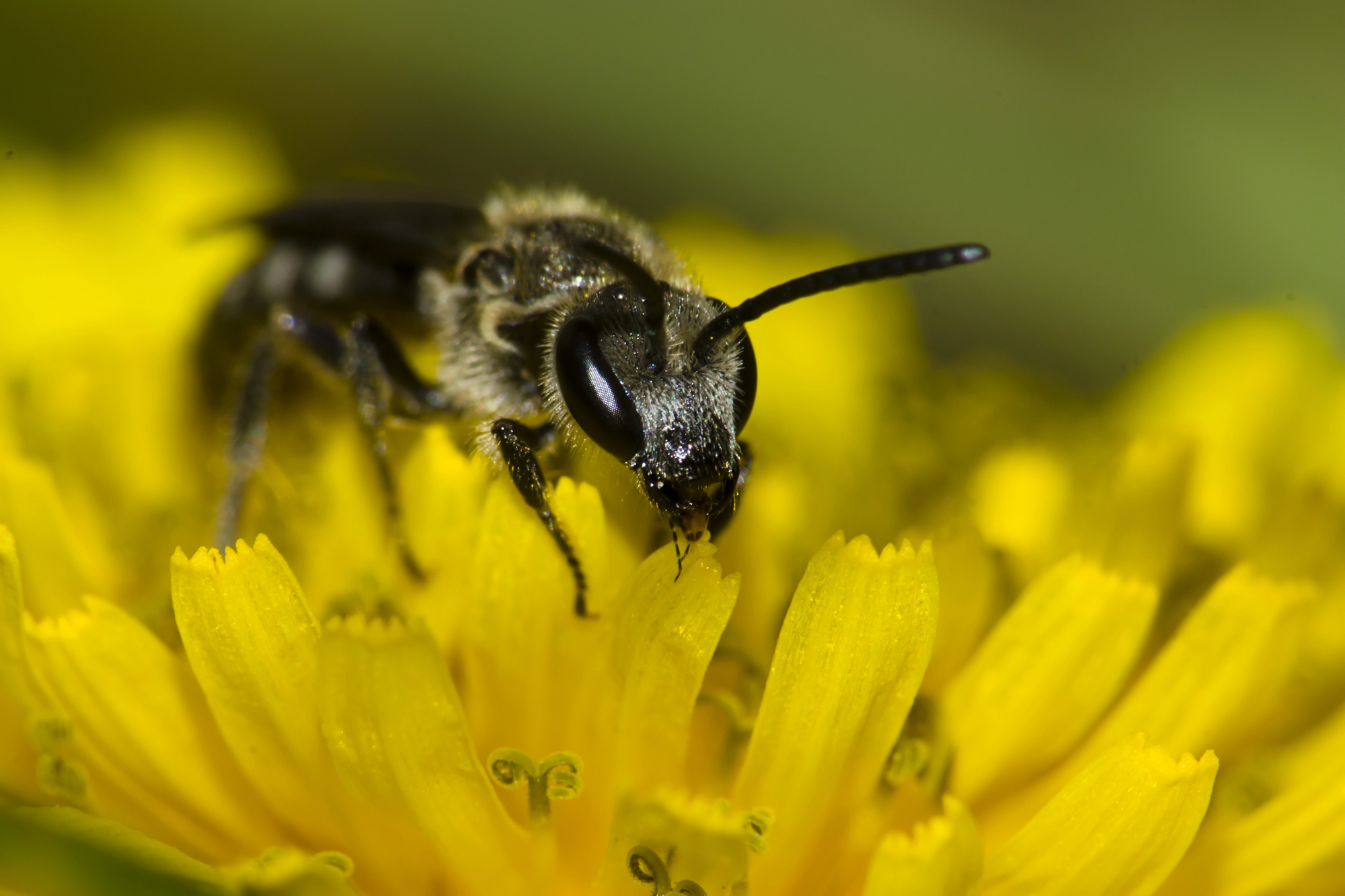
The second draw is nectar, and the usual source is a lawn full of flowering weeds. Clover, selfheal, daisies and creeping buttercup all open small flowers at grass height, and a lawn left a week too long between cuts can carry hundreds of them. Each flower is a tiny cup of sugar, and short-tongued wasps reach them easily. A lawn allowed to flower in a heatwave, when growth slows and mowing gets skipped, turns into a low meadow that hums with wasps, bees and hoverflies by mid-morning.
The third, and the one worth taking seriously, is a nest. Several social wasps, including the common yellowjacket types, build underground. They favour dry, well-drained soil and often move into an abandoned vole or mouse burrow rather than digging from scratch, which is why a summer of hard, dry ground makes lawns so attractive. The tell is traffic. A steady stream of wasps flying in and out of a single point in the grass, following the same low flight line, is an entrance. Ten or twenty wasps loosely quartering the whole lawn are feeding, not nesting.
How to Tell Feeding From Nesting Before You Act
Spend five minutes watching from a safe distance in the morning, when the light is low and flight paths show up clearly. Feeding wasps land on blades, on flowers or on the honeydew film, crawl about, then lift off in random directions. Nesting wasps ignore the grass surface entirely and drop straight into one spot, then reappear from the same spot and climb away on a fixed line. Mark the entrance from several metres back with a cane pushed into the ground nearby, never over the hole, so you can find it again at dusk.
Timing changes the risk. Ground nests are small and lightly defended in June, then grow through the season until a mature nest in August or September can hold several thousand workers. The earlier in summer you find one, the calmer and safer the situation. A single wasp near a flower is no reason to reach for a spray. A worn flight line into bare soil, with dozens of arrivals a minute, is the point at which a plan becomes sensible.
Fixing the Cause, Safely
If the draw is honeydew, treat the aphids rather than the wasps. A colony on a shrub or tree above the lawn can be knocked back with a firm jet of water every few days, or with an insecticidal soap spray such as SB Plant Invigorator (around £10/$13 for a ready-to-use bottle) applied to the undersides of leaves where aphids gather. Encouraging ladybirds and lacewings does the same job over a longer period. Once the honeydew stops falling, the wasps lose interest in that patch of grass within a day or two.
If the draw is nectar from a flowering lawn, the answer is a cut. Mow on a dry evening when foraging has dropped off, set the height to around 30mm (1.2 inches) so you take the flower heads without scalping the turf, and collect the clippings rather than mulching them back. Removing the flowers removes the reason the wasps were there. Keeping to a regular seven-day cut through the rest of summer stops the clover and daisies flowering again at grass height.
A ground nest is the one case where a product earns its place. A puffer pack of permethrin-based wasp nest killer, such as Nippon Ants and Wasp destroyer or a Rentokil wasp nest powder (roughly £6/$8 from B&Q, Home Depot, Amazon or most garden centres), is designed for exactly this. Apply it at dusk when almost all the workers are home and the light is too poor for them to track you, wearing long sleeves, gloves and covered ankles. Puff the powder around and into the entrance so returning wasps carry it inside on their bodies, then walk away. Do not block the hole; they need to keep passing through the treated soil for it to work. Check after two or three days and re-treat if traffic continues.
Two mistakes turn a manageable nest into an injury. The first is pouring petrol, boiling water or bleach into the hole. None of these reliably kills the colony, all of them provoke a mass defensive response, and petrol poured onto a lawn also kills the grass and poisons the soil for months. The second is mowing over a nest entrance, which sends a wall of vibration into the colony and can trigger dozens of stings in seconds. If you have marked a nest, mow around it with a wide margin until it has been dealt with. Anyone who reacts badly to stings, or who finds a large late-season nest, should hand the job to a professional pest controller rather than treating it themselves; a call-out is usually modest and far cheaper than a hospital trip.
Why It Pays to Leave the Harmless Ones Alone
It is worth separating the wasps that are a genuine problem from the ones doing you a favour. Solitary digger wasps and mining bees also work lawns in summer, leaving small volcano-shaped mounds of fine soil, and these insects do not defend their burrows or sting in any meaningful way. They are pollinators and pest controllers, and they vanish on their own within a few weeks. Even social wasps spend the first half of their lives clearing aphids and caterpillars off your plants. The aim is not to sterilise the garden of every wasp, but to remove the specific thing pulling large numbers onto the lawn and to deal firmly with a defended nest before it grows.
Get the diagnosis right and the fix is quick. A tacky shine on the grass points to aphids above it. A carpet of small flowers points to a mower that has fallen a week behind. A single worn flight line into bare soil points to a nest that wants treating at dusk with the right powder and a steady nerve. Match the response to the cause and the lawn is yours again, usually inside a week.