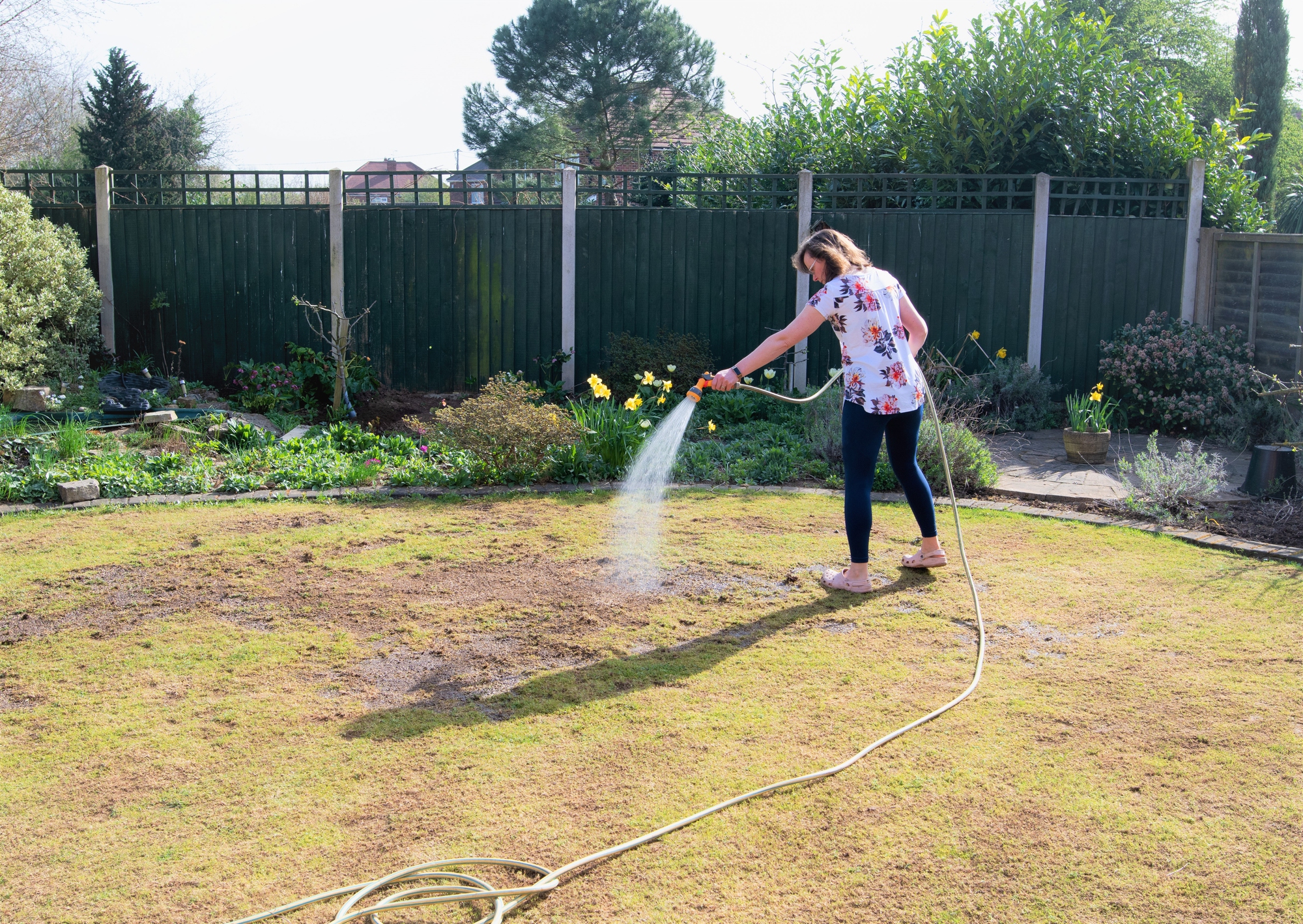
If patches of your lawn have turned a sickly yellow this month and the grass lifts away like a loose rug when you tug it, you almost certainly have grubs feeding on the roots underneath. The two culprits in late spring are chafer grubs, which are the larvae of the chafer beetle, and leatherjackets, the larvae of the daddy long legs or crane fly. Both spend the winter eating grass roots, and by mid May the damage they have done starts to show as yellow, dying patches that no amount of feeding or watering will revive.
The reason May is the month you notice them is that the surviving grass is now trying to grow hard. Healthy turf is putting on new blades and pulling water and nutrients through the roots. The patches above grub damage cannot do this because the roots are gone. So the lawn around them greens up and the affected areas turn yellow by contrast. The damage was done over winter. May is just when you see it.
How to Tell If It Is Actually Grubs
The simplest test takes thirty seconds. Walk to the edge of a yellow patch and grab a handful of grass. Pull firmly upwards. If the patch lifts in your hand with no root attached, like rolling back a bath mat, you have grub damage. Healthy grass with intact roots resists strongly. Grubbed grass comes up almost weightlessly.
If the lift test is positive, peel back the turf and look at the soil underneath. Chafer grubs are creamy white, curled into a C shape, with brown heads and visible legs. They range from 10mm to about 25mm long depending on age. Leatherjackets are different. They are greyish brown, smooth, legless, with a tough leathery skin, and shaped like a fat tube. Both will be in the top 2 to 5cm (1 to 2 inches) of soil at this time of year.
The other dead giveaway is animal damage. Foxes, badgers, magpies, jackdaws and crows know grubs are protein and will tear up a lawn to get at them. If you wake up to find chunks of your lawn flipped over or scratched apart, especially in spring or autumn, the wildlife is doing your diagnosis for you. The animals are not the problem. They are responding to the problem.
Counting the grubs tells you how serious the infestation is. Cut a square of turf about 30cm by 30cm (12 inches by 12 inches), lift it carefully, and count what you find in the soil underneath. Fewer than five grubs in that square is usually tolerable and a healthy lawn will outgrow the damage. Five to ten grubs and you have a problem worth treating. More than ten and the lawn will not recover without intervention.
Why the Damage Appears Now and Not Earlier
Chafer beetles lay their eggs in lawns in June and July of the previous year. The eggs hatch within a few weeks and the grubs begin feeding on grass roots immediately, growing through summer and autumn. As soil temperatures drop in November, they burrow deeper, between 15 and 30cm (6 to 12 inches) down, and stay relatively dormant.
In March and April, as the soil warms back to around 8°C (46°F), they migrate back up to the root zone and resume feeding. By May they are at their largest and hungriest, and the damage from a winter of root feeding is now visible because spring growth has revealed which patches can grow and which cannot. Leatherjackets follow a similar cycle. Crane flies lay eggs in August and September, and the larvae feed all winter and into spring before pupating in early summer.
This timing is the reason why May treatment has to be quick. The grubs you are looking at in May will pupate within a few weeks and emerge as adult beetles or crane flies in June and July. So a May treatment, if it is going to work, has to happen quickly. Wait until July and the grubs are gone, pupated, and the cycle is starting again with new eggs. Soil temperature also climbs sharply in late May, and warm soil pushes grubs deeper for a few days during the changeover, which is another reason to act before the end of the month rather than into June.
What Works and What Does Not
The most effective biological control is nematodes. These are microscopic worms that hunt down grubs and kill them from the inside. The product to look for is Nemasys Chafer Grub Killer or Nemasys Leatherjacket Killer, both from Nemasys, around £25/$32 per pack for 100 square metres. They are sold at most garden centres including B&Q, Wickes and Amazon, and also at specialist suppliers like Green Gardener and Gardening Naturally.
Nematodes are alive when you buy them and have a short shelf life. Keep them refrigerated and use within two weeks. To apply, dissolve the pack in a watering can, water the lawn thoroughly first to soak the soil, then apply the nematode mix evenly with a fine rose. Water in again for another ten minutes to wash the nematodes down into the root zone.
Timing is critical. Chafer nematodes work when soil temperatures are between 12°C and 20°C (54°F to 68°F). In cooler northern climates, late May into early June is usually the right window for spring application. In warmer southern regions, mid May is often ideal. The other application window is from late August through to early October when the new generation of grubs is small. Leatherjacket nematodes prefer slightly warmer soil and work best from August to October.
What does not work, despite what social media may suggest, is washing up liquid drenches, vinegar, or watering the lawn heavily in the hope of drowning the grubs. The grubs survive total immersion for several days. The lawn does not. You will damage the soil structure and feed disease without affecting the grub population at all.
Chemical options are limited and getting more limited every year. Imidacloprid, the active ingredient that used to be the standard, was withdrawn from amateur use across most of the United Kingdom and is restricted in parts of the United States. Acelepryn is approved for professional use in some regions but is not available to homeowners. For most gardeners, nematodes are now the only effective option, which makes timing them properly even more important.
Repairing the Damage and Stopping It Returning
Once the grubs are dealt with, the bare patches need fixing or they will fill with weeds within a fortnight. Scrape away the dead turf with a garden fork, rake the soil level, and overseed with a hard-wearing mixture. Johnsons Quick Lawn (around £15/$20 for 425g) or Scotts EZ Seed (around £18/$23 for the patch repair pouch) both germinate quickly at May soil temperatures. Cover lightly with topsoil, water daily for the first two weeks, and keep foot traffic off until you have three or four mowings of regrowth. There is more detail on this in our guide to fixing bare patches at lawnandmowers.com.
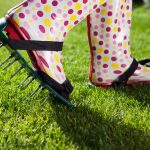
Long term, the best prevention is a thick, healthy lawn. Chafer beetles and crane flies prefer to lay eggs in short, sparse, stressed turf where the soil is exposed and warm. A lawn that is mowed at 3 to 4cm (1.5 inches), watered deeply rather than shallowly, and fed twice a year is far less attractive to egg-laying adults. Aerating in early autumn breaks up compacted soil and disrupts grub habitat. Overseeding in early autumn fills any thin areas before the next round of eggs can find bare soil.
If you have had grub damage two years running, plan a preventive nematode application for late August. That is when the eggs are hatching and the new generation of grubs is most vulnerable. A single autumn application can reduce the following spring’s damage by 70 to 80 per cent. Combine that with strong autumn lawn care and you should break the cycle within two seasons.