If the top millimetre of every grass blade on your lawn has turned pale yellow or whitish over the past week, the first instinct is usually to reach for a fungicide or a feed. In late May, with growth at its peak and damp warm nights driving everything from red thread to dollar spot, disease is a reasonable suspect. But before you spend money on chemicals, look at your mower. In nine out of ten lawns with this exact symptom, the cause is a dull cutting edge tearing the leaf tip instead of slicing it.
The reason yellow tips appear so suddenly at this time of year is that May is when growth rate doubles. Cool-season grasses such as ryegrass, fescue and bent are producing fresh leaf tissue at the limit of what the plant can support, and the same blade that coped fine through April is now being asked to cut twice the volume of grass on every pass. Even a slightly dull edge that used to work is now pulling and shredding every blade it touches. Once you understand the mechanism, the fix takes less than half an hour and the lawn changes appearance within four or five days.
What a Torn Leaf Tip Actually Does to the Plant
A grass blade is a hollow tube of plant tissue. When a sharp blade passes through it, the cut is a single clean slice perpendicular to the leaf surface. The wound closes naturally within hours as the plant seals it with suberin, a corky protective layer. Water loss is minimal and the green chlorophyll layer just below the cut continues photosynthesising as normal. A clean cut on a healthy lawn is barely visible after 24 hours.
A dull blade does something completely different. Instead of slicing, it strikes the leaf at high speed and pulls it sideways. The leaf tears along the grain rather than cutting cleanly, leaving a ragged frayed end up to 4mm (about 0.15 inches) long. That torn surface area is roughly five times larger than a clean cut, which means five times more moisture loss through transpiration. Within 24 to 48 hours, the damaged tissue dies back and turns pale yellow or whitish. From a distance, the whole lawn looks faded or unwell, even though only the top fraction of each blade is affected.
The bigger problem is that ragged wounds are an open invitation for fungal pathogens. Red thread, dollar spot and microdochium patch all enter through damaged leaf tissue. So a blunt blade not only causes the yellow tips directly, it also creates the conditions for genuine disease to follow. By the time disease symptoms appear two to three weeks later, most people blame the weather and never trace the original cause back to the mower.
How to Check Your Blade in Two Minutes
You do not need to remove the blade to know if it is sharp. Three quick checks tell you almost everything.
First, look at the lawn at low sun, either early morning or late evening. If the tips have a uniform yellow or white frosted appearance across the whole lawn, that is not disease. Disease shows up in patches, rings or streaks. A blunt-blade signature covers everything because every pass of the mower hits every blade.
Second, kneel and look closely at the cut end of a single grass blade. Pick three or four blades from different parts of the lawn. A sharp cut shows a clean line, even if it angles slightly. A dull cut shows fraying, splitting along the length, or a crushed pale end where the fibres have been pulled apart. If you can see white fibrous edges with the naked eye, the blade is well past sharpening time.
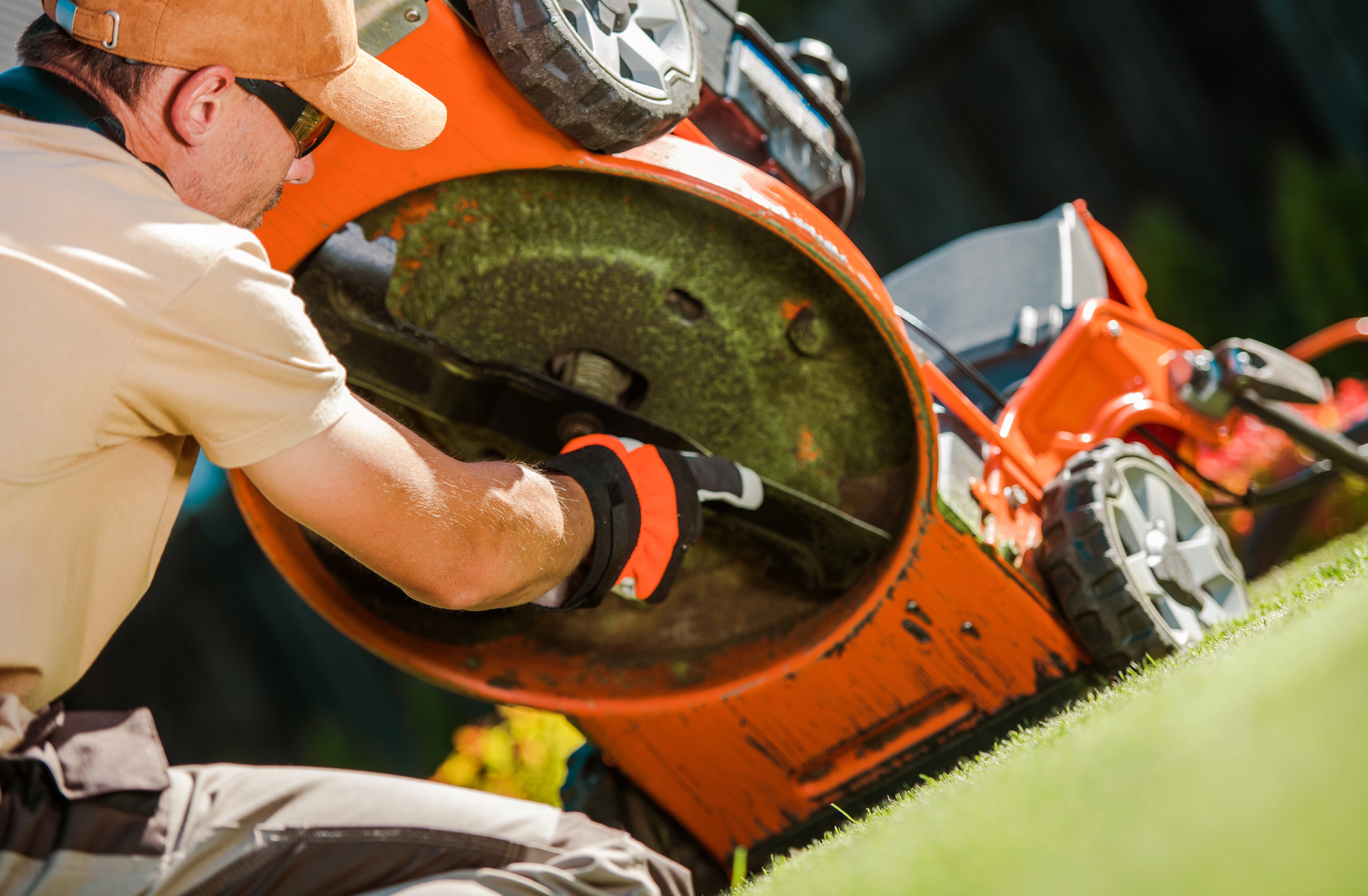
Third, run a fingernail across the cutting edge of the blade itself. Unplug the mower or remove the battery first, tip the deck up safely, and stroke gently from the centre of the blade outward toward the tip. If your nail glides smoothly without catching, the edge is rounded and dull. A sharp edge will catch slightly and feel like a soft butter knife under your nail. You are not testing for razor sharpness here, just for a defined edge.
The Quick Fix Most People Miss
The standard advice is to sharpen the blade. That works, but it takes an hour with a file or grinder and a balancer, and many people put it off. There are two quicker options for late May when you want a visible improvement within a week.
The first is to fit a replacement blade. For most cordless and corded rotary mowers, a new factory blade costs between £12/$15 and £25/$32 depending on the brand. Bosch, Flymo, Honda and Mountfield all sell replacement blades that fit in under ten minutes with a single bolt. Spear and Jackson universal replacement blades on Amazon are around £14/$18 and fit a wide range of decks. If your mower is more than three years old and the original blade has never been replaced, swapping it costs less than a single sharpening service call and gives a noticeably cleaner cut for the rest of the season.
The second option is mid-mow correction. Raise your cutting height by one notch on the next mow. A grass blade cut at 35mm (about 1.4 inches) with a slightly dull mower will show less visible damage than the same blade cut at 25mm (about 1 inch), because the proportion of damaged tissue to healthy leaf is smaller. This is not a permanent fix but it buys you two weeks while you order or sharpen a blade. Combine it with mowing more frequently. A leaf removed in small bites takes less force to cut, which reduces the tearing effect of a marginal blade.
Why Late May Is the Worst Time to Ignore This
Most lawns can absorb the damage from a dull blade in April or September when growth is slower and temperatures are mild. In late May, three conditions amplify the problem at once. Growth is at peak rate, so you mow more often and inflict damage more often. Soil moisture is dropping as the first dry spells arrive, so torn blades lose water faster than they can replace it. And night temperatures are climbing into the range where fungal pathogens start to spread, so the ragged wounds become entry points within days rather than weeks.
The Royal Horticultural Society advice is clear that mower blades should be sharpened at least once per season for a domestic rotary mower, and twice for any lawn over 100m2 (about 1,000 sq ft). Professional groundskeepers sharpen weekly during peak growth. For a typical household, sharpening once at the start of spring and once again in mid-summer is the realistic minimum. If you have not touched your blade since last year, late May is the moment you will see the cost.
What to Do This Week
If your lawn shows yellow tips today, here is the order of operations for the next seven days.
Skip your next mow by one day if possible, to let the damaged tissue start dying back naturally. Then check the blade using the three tests above. If it is dull, either replace it for around £14/$18 or sharpen it with a flat metal file in 20 minutes, taking eight to ten strokes along the existing bevel. Refit the blade and test the cut on a small patch first. The cut blades should look clean and white-green at the tip, not pale yellow or frayed.
Mow at your normal height plus one notch for the first two cuts after the new blade. Water lightly if the soil is dry, around 10mm (about 0.4 inches) of water spread over the lawn, to help the plant recover. By day five or six, the damaged tips will have been removed by the next mow and the new growth coming up underneath will be the clean even green you wanted in the first place.
The most common mistake people make at this stage is reaching for a high-nitrogen feed to mask the yellow. That makes the lawn look greener for three or four days, but it also forces a flush of new growth that the same dull blade will damage on the next pass. Fix the cut first, then feed if needed. A lawn that looks slightly tired but is being cut cleanly will recover faster than a thick lawn being shredded every five days.
Yellow tips in late May are almost always a tool problem disguised as a plant problem. Spending £15 on a new blade or 20 minutes on a file will do more for the appearance of your lawn over the next month than any feed, fungicide or weed treatment you could buy.