Two weeks after sowing, you walk out expecting a haze of green and the soil looks exactly the same as the day you raked the seed in. This is one of the most common gardening frustrations, and almost every time the cause is one of five things, all fixable, none requiring you to start over from scratch yet.
The window for a rescue is shorter than people realise. Once seed has sat for three weeks without germinating, viability drops fast. Birds will have taken some, fungal rot will have killed others, and the rest will struggle to push through any crust that has formed on the surface. The right diagnosis in the next few days could still save the patch. The wrong response, or no response, usually means starting over in autumn.
The First Question to Ask Is About Soil Temperature, Not Air Temperature
Grass seed germinates by soil temperature, not the reading on your phone weather app. Air can hit 22 degrees C (72 degrees F) at midday in May and the soil 2cm down might still be sitting at 10 degrees C (50 degrees F) overnight. Different grass species need different soil temperatures to break dormancy.
Perennial ryegrass and most lawn mixes need consistent soil temperatures of 8 to 10 degrees C (46 to 50 degrees F) for at least two weeks before germination begins. Tall fescue prefers 15 to 18 degrees C (60 to 65 degrees F). Kentucky bluegrass germinates well between 10 and 16 degrees C (50 to 60 degrees F) but takes 21 to 28 days even in ideal conditions. Warm-season grasses like bermuda or zoysia need soil temperatures of 18 degrees C (65 degrees F) minimum, and ideally 21 degrees C (70 degrees F).
A cheap soil thermometer at around £8 to £12 ($10 to $15) settles the question in seconds. Push the probe to 5cm (2 inches) deep, take a reading in the early morning and again in the late afternoon, and average them. If the average is below the threshold for your grass type, germination is delayed, not failed. The seed is fine. It is waiting. Cover with a thin straw mulch to lift the soil temperature by 2 to 3 degrees C and check again in a week.
The Second Question Is About Moisture, and the Answer Is Almost Always Wrong
The single most common reason for germination failure is inconsistent watering. Grass seed needs the top 4cm (1.5 inches) of soil to stay moist throughout germination, not soaked, not dry, but consistently damp. The seed absorbs water, swells, and breaks dormancy. If the surface dries out at any point during that swelling phase, even for a few hours on a sunny afternoon, the embryo dies. Many seeds need to imbibe water and start metabolic processes within 24 to 48 hours of moistening, and a single dry-out kills them.
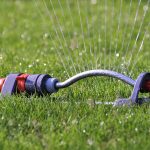
The fix is short, frequent watering. Two to four light waterings per day of 5 to 10 minutes each, enough to wet the surface, not enough to puddle. A garden hose with a fine rose attachment works fine. An oscillating sprinkler on a tap timer is even better, set to run for eight minutes at 7am, noon, 4pm, and 7pm during the germination window. The total water used is around 10 to 15 litres per square metre per day (roughly 2 to 3 gallons per square yard), far less than the wasteful 25 to 30 litres many people apply in a single deep soak.
Once seeds have sprouted to around 3cm (1 inch) tall, reduce to twice daily for another week, then once daily as the roots establish. By the time the first mow comes around at roughly 8cm (3 inches) of growth, you should be down to deep watering twice a week.
If you have been watering once a day or every other day, the seed has almost certainly dried out during germination and most of it is dead. Run a quick test: scratch the top 1cm of soil with a fingernail and look for white seed coats. If the seeds are still white and intact, they may still be viable. If they look grey or have split open and gone slimy, they are gone.
The Third Question Is About Sowing Depth and Cover
Most grass seeds need to be covered by no more than 6mm (0.25 inches) of soil. Push them deeper than 13mm (0.5 inches) and they exhaust their seed reserves before the shoot reaches the light. The classic mistake is to rake too aggressively after sowing, burying half the seed at twice the optimal depth.
The correct technique is to scatter seed at the rate printed on the bag (typically 35 to 50g per square metre for overseeding, 50 to 70g per square metre for a new lawn), then walk the area with a leaf rake held almost flat to the ground, just scuffing the surface to bring soil over the seed. A roller or a flat board pressed down with body weight afterwards ensures good seed-to-soil contact, which is more important for germination than burial depth. Seed sitting on top of loose dry soil will not germinate even if watered well, because the connection between seed coat and moist soil is broken.
If your seed was scattered onto cold compacted soil and not covered, birds will have taken most of it within 48 hours. A pigeon can clear a square metre of exposed lawn seed in a single morning. A thin straw mulch at no more than 6mm (0.25 inches) deep both holds moisture and hides the seed from birds. Hessian sheets pinned in place do the same job with less mess.
The Fourth Question Is Whether You Sprayed Anything in the Last Three Months
Pre-emergent weed killers like Westland Resolva Lawn Weedkiller and similar products work by forming a chemical barrier in the top centimetre of soil that prevents any seed from germinating. They do not distinguish between crabgrass and your new fescue. The barrier lasts 8 to 14 weeks depending on the active ingredient and rainfall.
If you applied a weed and feed product earlier in the spring, you may have inadvertently sterilised the patch. Check the bottle for a “do not seed for X weeks” warning. Most lawn weed killers require a four to twelve week gap before sowing, and a few require longer. Pre-emergent crabgrass preventers commonly require a three to four month wait.
The fix is patience: wait out the residual period and reseed. Adding more seed in the interim is throwing money on contaminated ground. If you are unsure what was applied and when, a heavy soak with 25mm (1 inch) of water over two days will speed up the breakdown of most products, then wait another two weeks before reseeding.
The Fifth Question Is About the Seed Itself
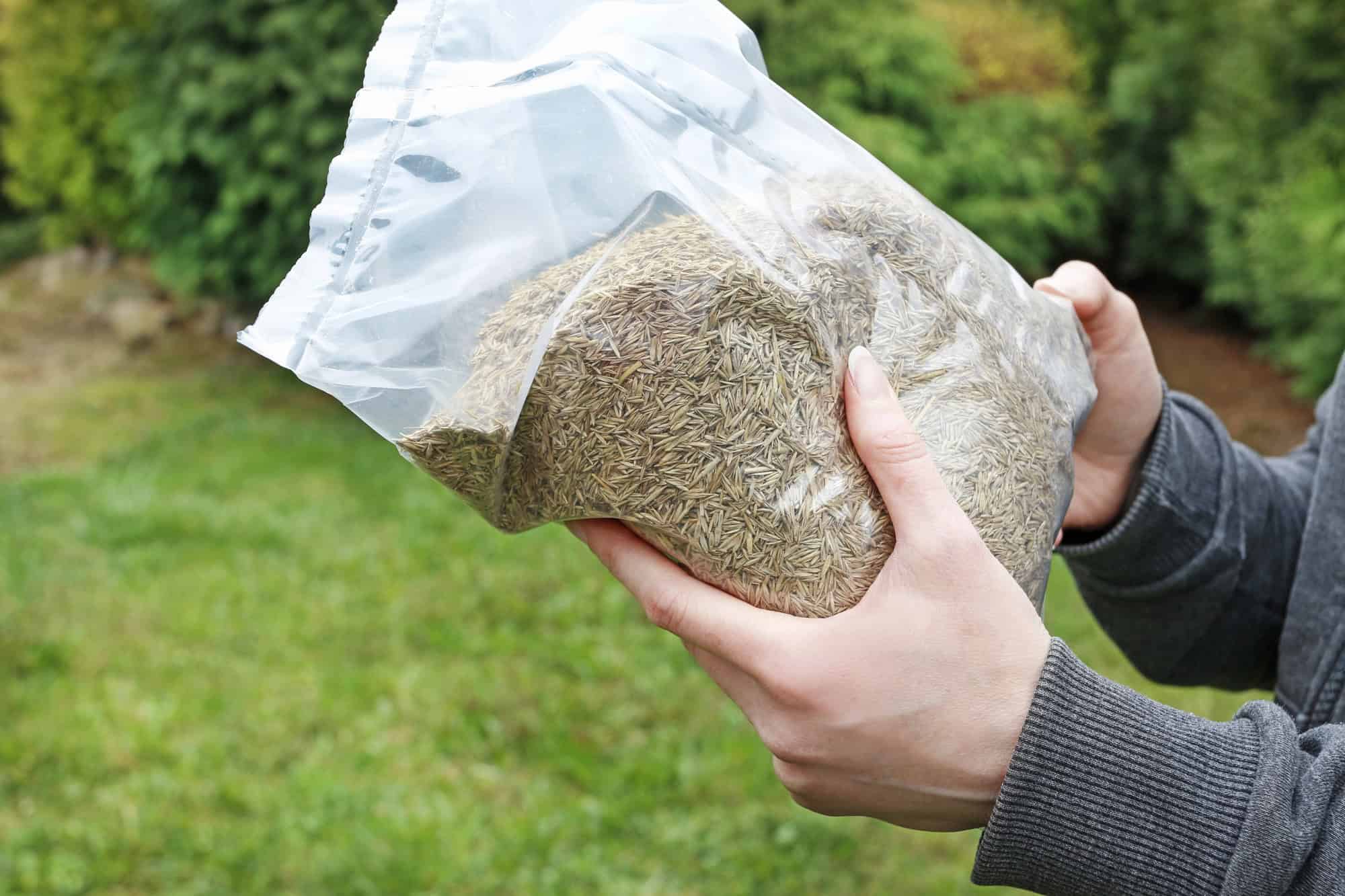
Grass seed has a shelf life. Stored in a cool dry shed in its original bag, most varieties stay above 80 percent germination for two years. Stored in a hot garage, left in a damp bag, or carried over from three summers ago in the boot of the car, viability can drop to 30 or 40 percent within a season. The seed looks identical. It just will not grow.
A quick viability test takes four days. Count 20 seeds, place them on a damp paper towel inside a clear plastic container, and leave on a kitchen windowsill at around 18 to 20 degrees C (65 to 70 degrees F). After four to seven days, count how many have sprouted. If 16 or more sprout, the seed is fine. If 10 or fewer sprout, buy a new bag.
The same test reveals whether birds are stealing your outdoor seed: if the windowsill test germinates 18 of 20 but nothing has appeared outside, the seed never got the chance.
The best quality seed in the consumer market for general lawn use sits around £20 to £30 ($25 to $38) per kilogram. Cheap supermarket lawn seed at £5 ($6) per kilogram often contains a high proportion of annual ryegrass, which germinates fast and dies within a year. If your reseeding has failed and you are starting over, this is the moment to upgrade. A quality mix from Pro-Lawn, Rolawn Medallion, or Scotts EZ Seed produces noticeably better results from the same effort.
Work through the five questions in order before you give up. Soil temperature, watering, depth and cover, residual herbicide, seed viability. Eight times out of ten the answer is in there. The remaining cases usually trace back to a soil problem (compaction, waterlogging, pH below 5) that a soil test would have flagged before you spent on the seed. Either way, the next attempt should work, and there is still time to get a new patch established before midsummer heat arrives.