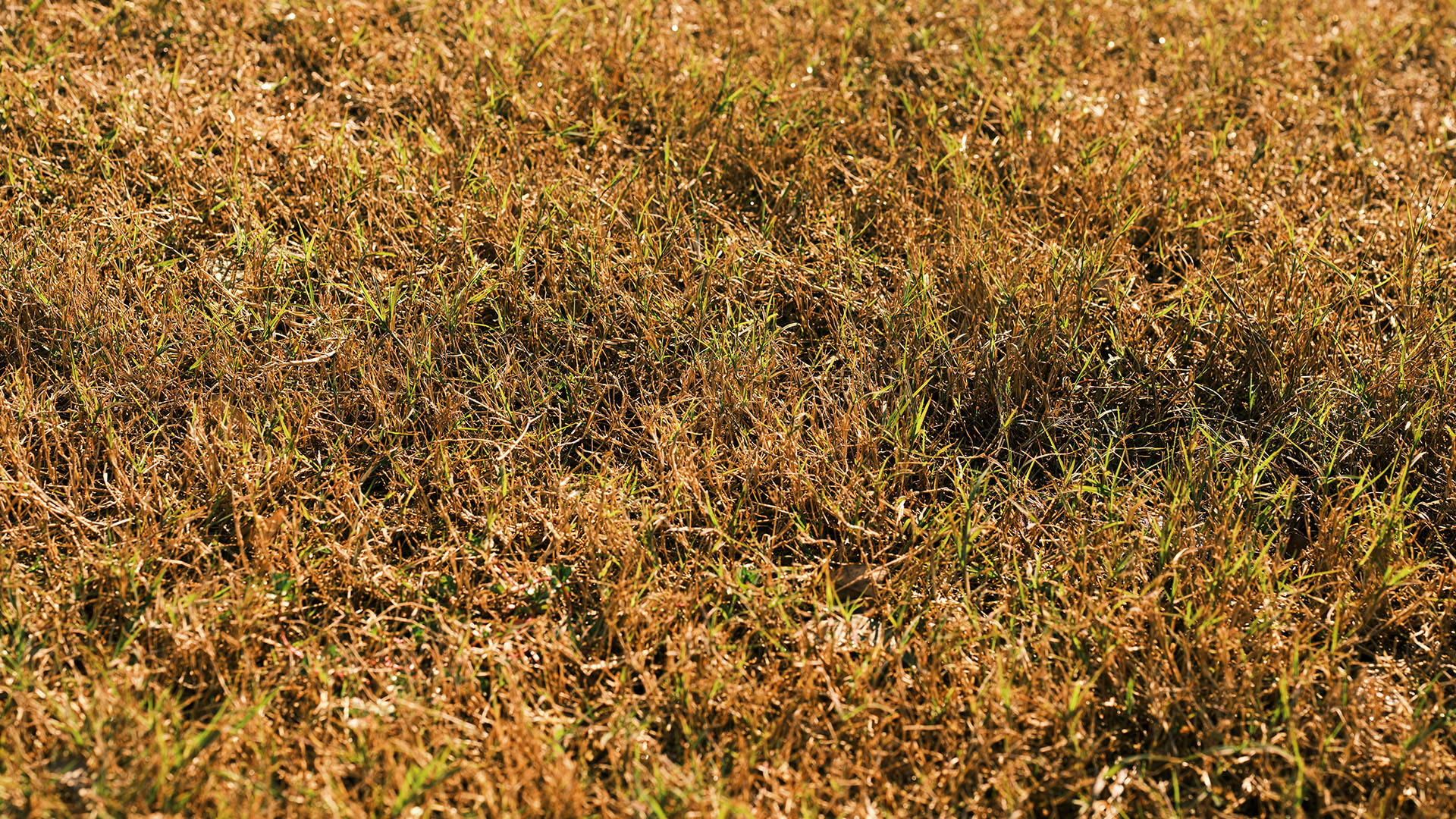
If your lawn has suddenly developed irregular patches of pinkish or pale-tan grass over the past week or two, with thin red threads or tendrils visible on the leaf blades when you look closely, you are almost certainly dealing with red thread disease. It is the single most common turf disease in temperate climates during late spring and early summer, and warm muggy weather following heavy May rain creates exactly the conditions it prefers. The good news is that red thread is almost entirely cosmetic, will not kill your lawn, and can usually be cleared up with a single feeding decision rather than a bottle of fungicide.
Get the diagnosis right and the response right, and the patches will be growing out within two to three weeks. Misdiagnose it as a watering problem and you will make it worse. Here is exactly how to spot red thread, what triggers it, and how to clear it without resorting to expensive chemical controls.
How to Identify Red Thread, Not Something Else
Red thread disease is caused by a fungus called Laetisaria fuciformis. It produces three classic signs that, taken together, leave little doubt about the diagnosis. First, the affected patches are usually circular or irregular in shape, ranging from about 8 to 25cm (3 to 10 inches) across. Second, those patches take on a pinkish-red, salmon, or tan cast rather than the brown of drought damage. Third, and this is the giveaway, when you part the grass and look at the blades themselves, you will see fine, coral-red strands or thread-like structures protruding from the tips and along the edges of the leaves. These threads, called sclerotia, are dry and slightly brittle when conditions are calm and become noticeably pink when humid.
A second symptom, often seen alongside the red threads, is a cotton-wool-like pink mycelium visible on the grass first thing in the morning when dew is heaviest. It can look almost like spider web tinged with pink.
Confusion is most common with three other problems. Drought-stressed grass turns brown rather than pink and is uniform across exposed areas, with no thread-like structures on the blades. Dollar spot creates much smaller patches, usually no bigger than a coin, with bleached straw colour rather than pink. Pink patch, the closest visual match, lacks the red thread sclerotia but produces a similar pink mycelium; treatment is the same as for red thread, so getting this distinction exactly right is not critical for the home gardener.
Why Red Thread Appears in Late Spring
The fungus is present in almost every temperate lawn at low levels year-round. What triggers a visible outbreak is a specific combination of conditions: leaf surfaces that stay wet for long periods, temperatures between 15 and 24°C (59 to 75°F), and grass plants that are short on nitrogen. May routinely supplies all three. Cool nights produce heavy dew, the air is warming through the day, and the early-spring fertiliser most lawns received in March has been used up.
Susceptible grasses include perennial ryegrass, fine fescues, and Kentucky bluegrass, which between them make up the great majority of garden lawns. Bermuda and zoysia lawns in warmer southern climates are largely unaffected.
The single biggest predictor of an outbreak is nitrogen deficiency. Red thread is, more than almost any other lawn disease, a hunger sign. A grass plant low on nitrogen has slower leaf growth, thinner cell walls, and longer recovery times between mowings. Each of those things makes it easier for the fungus to colonise. Lawns that have not been fed since early spring, or that have been mowed weekly without ever being fertilised, are the classic targets.
The Feeding Response That Clears Red Thread
For the home gardener, fungicide is rarely necessary and almost never the first answer. The most reliable cure is a balanced application of a nitrogen-led summer lawn feed within the next seven days. The fungus is suppressed almost immediately by the surge of healthy new growth.
Strong product choices for this stage of the season include Westland SafeLawn (around £18/$23 for 400m²), which is a child-and-pet-safe organic feed with an NPK around 9-0-2 and works gently enough to use when the lawn is mildly stressed; Miracle-Gro EverGreen Complete 4-in-1 (around £19/$24 for 360m²), which delivers around 22-5-5 plus a weed and moss control; or for a purer nitrogen hit, Scotts Turf Builder Lawn Food (around £22/$28 for 400m² or about $26 for a 5,000 sq ft bag) with an NPK close to 32-0-4. Apply at the rate the packet states, which is usually 35g per square metre for a typical granular feed.
For a 50 square metre back garden, that works out to roughly 1.75kg of granular feed in a single pass. A handheld broadcast spreader such as the Scotts Wizz or a basic rotary spreader from Bosmere or Greenkey will give you a more even spread than scattering by hand, and even coverage is what produces an even response. Water it in lightly with a sprinkler if no rain is forecast within forty-eight hours.
You should see the affected patches start to green up from the base within seven to ten days, and the red threads themselves will fall off as the leaves grow and you mow. By two to three weeks, the patches should be largely indistinguishable from the surrounding lawn. There is no need to scarify or rake out the diseased grass; the fungus dies back as the grass recovers, and raking only spreads spores.
What to Avoid While the Lawn Recovers
Three behaviours actively make red thread worse, and all three are common.
The first is overwatering, particularly in the evening. The fungus thrives on extended leaf wetness, and watering after about 4pm leaves grass damp overnight. If you are watering during a dry spell, do it early in the morning so the grass dries fully by lunchtime. Once or twice a week deep watering beats daily light watering for almost every disease and every drought scenario.
The second is mowing too short. Cutting below 3cm (1.2 inches) stresses the plant and removes the actively growing tissue that you need to outpace the fungus. Set your mower to 4 to 5cm (1.5 to 2 inches) until the lawn has recovered, and mow weekly rather than fortnightly so each cut is light.
The third is collecting clippings and then putting them on the compost heap to use elsewhere on the lawn later. Bag and bin the clippings from affected areas for the next three or four mowings to reduce spore spread. The mower deck and the underside of the cutting chamber should be rinsed off after each mow during an active outbreak.
Avoid applying high-phosphate “lawn boosters” or root-stimulator feeds. They do not target the fungus, and they take feeding pressure off the nitrogen response that actually works.
When Fungicide Is Worth Considering
For the great majority of garden lawns, fungicide is unnecessary. Where it earns its place is on prestige lawns, bowls greens, and ornamental gardens where appearance during May and June is critical for an event such as a wedding or open garden weekend. In those cases, products containing tebuconazole or trifloxystrobin (often sold to greenkeepers rather than retail customers) can knock back the visible symptoms within days.
For a typical home lawn, the cost of a single bottle is usually higher than a season’s worth of feed, and the underlying cause, low nitrogen, has not been addressed. The far better long-term strategy is to set up a consistent feeding programme: a balanced spring feed in March or April, a high-nitrogen summer feed in late May or early June, and an autumn lawn food in September. Two to three years of that pattern more or less eliminates red thread from a previously susceptible lawn.
Preventing It Next Year
Once you have cleared this round, set a calendar reminder for early to mid May next year and feed the lawn before red thread can establish. Aerating with a hollow-tine fork or a powered aerator once a year in autumn improves drainage and reduces the surface wetness the fungus needs. Mowing at the right height, around 3.5 to 4.5cm (1.5 to 1.8 inches) through the growing season, and never removing more than a third of the leaf in any single cut, keeps the grass strong enough to fight off most spring diseases without intervention.
A small amount of red thread every May is, in a healthy mixed lawn, almost normal. What you want to avoid is the kind of spreading, patchy outbreak that turns your lawn pink from the front gate. With a feed in your hand today and a mowing routine that does not stress the grass, you can stop that happening every year from now on.