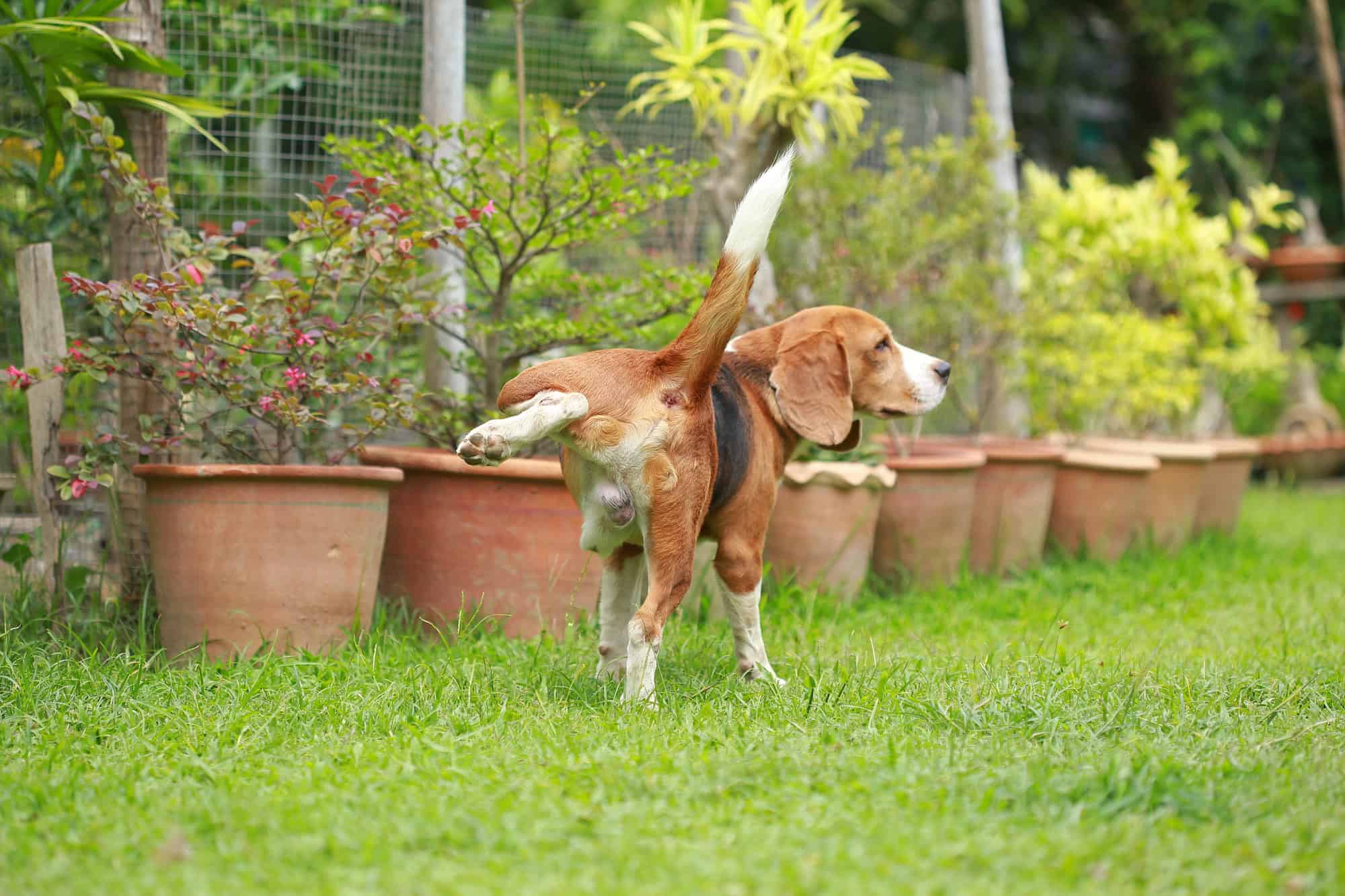
If your dog leaves yellow or brown spots on the lawn, the grass is not reacting to anything toxic. It is being overdosed on nitrogen and salt. The fastest way to limit the damage is to flush the spot with water within a few hours, keep your dog well hydrated so the urine is more dilute, and train it to use one gravel or mulch corner of the garden. Everything else, including which grass you grow and how you repair the dead patches, builds on those three ideas.
What Is Actually Burning Your Grass
Dog urine is rich in urea, a nitrogen waste product. Once it hits the soil, bacteria break the urea down into ammonia and then into nitrates. Nitrogen in small amounts is exactly what lawn feed delivers, which is why you often see a ring of dark, thick green grass around the edge of a urine spot. That halo is the diluted edge of the dose acting as a fertiliser. The dead centre is the part that received too much. It is the same effect as tipping a handful of granular feed onto one spot and leaving it: the grass scorches.
Salt makes the problem worse. Urine carries dissolved salts, and a concentrated dose raises the salt level in the soil around the roots. Water always moves from a low-salt area to a high-salt area, so the salty soil pulls moisture back out of the grass roots rather than letting the roots draw water in. The plant effectively dries out from the inside even when the soil is damp. That is why a urine burn looks so much like drought scorch.
Female dogs cause more visible spots, but not because their urine is different. Females and most puppies squat and empty the whole bladder in one place, concentrating the dose. Many male dogs lift a leg and spray smaller amounts over a wider area, which spreads the nitrogen thinly enough to act as feed rather than poison. Breed and diet myths aside, any dog that empties its bladder in one spot will burn grass there.
Stopping the Damage Before It Starts
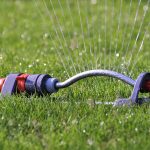
The single most effective habit is dilution. If you see your dog urinate, pour water over the spot as soon as you can, ideally within eight hours and sooner in hot weather. Around 10 litres (about 2.5 gallons), or three to four full watering cans, will dilute the nitrogen and carry the salts down past the root zone before they can scorch. A hose left running gently on the spot for thirty seconds does the same job.
Hydration helps from the inside. A dog with constant access to fresh water produces more dilute urine, which lowers the concentration of nitrogen and salt that ever reaches the grass. Resist the temptation to change your dog’s diet or add supplements that claim to alter urine pH. The acidity of the urine is not the cause, the nitrogen load is, and some of those additives can affect a dog’s health. Speak to a vet before changing anything your dog eats or drinks. Water filtering products such as Dog Rocks (around 10 pounds / 13 dollars for a pack that lasts about two months) sit in the water bowl and claim to reduce certain minerals; results are mixed, so treat them as a minor help rather than a fix.
Training reduces the spread. Set aside a corner of the garden, roughly 2m by 2m (about 6ft by 6ft), surfaced with pea gravel, bark or mulch, and reward your dog for using it. A dedicated spot keeps the rest of the lawn clear. Grass choice helps too. Ryegrass and fescue tolerate urine far better than Kentucky bluegrass or bermuda, which are the most sensitive. If you are reseeding anyway, a hard-wearing ryegrass and fescue mix is the sensible pick for a dog household. Keep these areas mown a little higher, around 5 to 6cm (2 to 2.5 inches), because longer grass has deeper roots and shrugs off stress better, and avoid feeding spots that already get a regular nitrogen dose from the dog.
Repairing the Patches You Already Have
Start by raking out the dead grass until you reach soil. Then flush the area heavily with water over several days to leach the built-up salts down through the soil. This step is the one most people skip, and skipping it is why fresh seed so often dies in the same spot: the salt is still there, and the new seedlings scorch exactly as the old grass did. A handful of gypsum (around 10 pounds / 13 dollars for a 5kg bag, available at B&Q, Home Depot, Amazon or garden centres) worked into the surface helps displace sodium and improve drainage, speeding the flush.
Once the soil has been watered through for several days, topdress with a thin layer of fresh loam or compost and oversow with a ryegrass and fescue repair mix (around 8 pounds / 10 dollars for a small box that covers patches). Keep the seed damp and expect germination in 7 to 21 days depending on temperature. In warm June soil it tends to be quick. Avoid reaching for a high-nitrogen feed to push the repair along, because the spot is already nitrogen-loaded and more will simply scorch the seedlings. For more on establishing fresh grass in summer heat, see our guide on what to do after laying new turf in the middle of summer, and keep the repaired area mown at the right height using the advice in how high to cut your lawn in summer.
Get the repair wrong and you end up in a loop: dead patch, reseed, dead patch again, because the salt was never removed and the dog keeps returning to the same favourite spot. Break the cycle by flushing first, reseeding second, and redirecting the dog to its gravel corner while the new grass roots.
Myths and Quick Fixes Worth Skipping
A handful of popular remedies do more harm than good, or simply waste money. The most common is adding something to the dog’s food or water to change the acidity of its urine. Products marketed to neutralise urine pH, along with home tricks like tomato juice or apple cider vinegar in the bowl, target the wrong thing. The browning is driven by the nitrogen load and the salts, not by whether the urine is acidic or alkaline, so altering pH rarely changes the result on the grass and can upset the chemistry of a dog’s bladder. Some of these supplements have been linked to bladder stones and other health problems, which is why any dietary change should go past a vet first.
Lawn conditioner tablets that claim to bind the nitrogen in the soil give patchy results at best and are no substitute for diluting with water. Likewise, scattering ordinary lawn feed over urine spots to even out the colour usually backfires, because the spots are already carrying more nitrogen than the surrounding grass, so the extra feed pushes them further into scorch. The cheapest tool that actually helps is the one already attached to your outside tap: water, applied quickly and in volume.
Puppies and elderly dogs need a little extra thought. Both urinate more often and frequently in the same convenient spot near the door, which concentrates the damage. Walking a puppy to its gravel area each time during training, and giving an older dog a closer, surfaced toilet spot, spreads the load off the lawn. A hard-wearing alternative for heavy dog traffic is a ryegrass and fescue mix oversown with a little microclover, which fixes its own nitrogen, stays green under stress and hides wear better than fine grass alone.
Put together, the plan is simple and cheap. Keep the water bowl full so the urine is dilute, flush any spot you catch with a hose or a few cans of water before the nitrogen and salt can bite, give the dog its own gravel corner and reward it for using there, and grow a ryegrass and fescue lawn that shrugs off the odd accident. For the patches already burned, rake them out, water the soil through for several days to wash the salt away, then reseed and protect the new grass from the dog while it roots. None of it relies on special products, and all of it works because it tackles the real cause, which is too much nitrogen and salt landing in one small spot, rather than the myths that surround it.