A tired, patchy lawn at the end of summer usually points to one hidden culprit sitting right at the base of the grass: thatch. Early autumn, with its mild air and damp soil, is the window to rake it out and hand the grass a clean start before winter. The Royal Horticultural Society lists scarifying among the key September and October lawn jobs, and the pay-off shows up the following year in thicker, healthier turf.
Skip it and the mat keeps building. Water and feed run off the surface, disease finds a foothold, and the grass thins until moss takes over. An afternoon with a rake now saves you a re-turfing bill later.
How to tell if your lawn needs scarifying
Part the grass with your fingers and look down at the soil. If you cannot see the soil between the blades, a spongy brown layer has built up and the lawn will benefit from raking. That is the RHS rule of thumb, and it takes about ten seconds to check.
Gardeners’ World puts a number on it. Aim to keep the thatch layer under 1cm (about 0.4in). A thin skin of thatch is a good thing: it shelters the grass crowns and holds a little moisture at the surface. Past 1cm, the balance tips the wrong way and the layer starts working against the lawn.
Other tell-tale signs point the same way. Grass that feels springy or bouncy underfoot, moss creeping through the sward, and rainwater that pools or sheets off rather than soaking in all say the same thing: the base of the lawn is clogged.
What thatch actually is, and why it builds up
Thatch is a mat of dead and living material woven together at soil level: old clippings, stems, crowns, roots and rhizomes. It forms when this organic matter gathers faster than the soil’s microbes and worms can break it down. Grass tissue is high in lignin, a tough fibre that resists rot, so in a lawn that is fed hard, watered often, or mown with the clippings left lying, the layer thickens year on year.
Here is why a thick mat harms the grass above it. Thatch behaves like a thatched roof laid over the soil. Rain and dissolved feed run across it and drain away at the edges instead of sinking down to the roots where they are needed. The RHS notes that clearing thatch helps a lawn cope with drought, as water reaches the soil far more easily, and improves air movement between the grass plants, which lowers the risk of fungal problems. A dense, airless base is exactly the setting that lawn diseases such as red thread and fusarium exploit.
The mat also starves the next generation of grass. New seed and side-shoots (tillers) struggle to push roots through a compacted layer of old fibre, so the sward slowly thins. Moss, which thrives on that damp, airless surface, moves straight into the gaps. Gardeners’ World is blunt about the endpoint: left unchecked, heavy thatch gives you a patchy lawn full of moss.
How to scarify, step by step
Get the timing right first. September and October are the months to do this, while the grass is still growing strongly and can knit back together well ahead of the first hard frosts. One warning: wait a full year before scarifying a newly seeded or freshly turfed lawn, or you will tear out young roots that have not yet anchored.
Mow the lawn a day or two beforehand, a touch shorter than your usual height, and clear the clippings so the rake can reach the base of the grass. Then work through these steps:
- Use a spring-tined rake (£10 to £18 / $13 to $23). Draw it firmly through the grass at a shallow angle so the tines comb the brown thatch and moss up to the surface. You will see it piling up quickly.
- Work in two directions. Rake the whole lawn one way, then go over it again at right angles. Crossing the pattern lifts debris evenly and reaches thatch that a single direction skims over.
- Be firm, not brutal. Gardeners’ World cautions against raking too hard, and against stripping every scrap out. The goal is to thin the layer while leaving a little thatch behind, not to scalp the soil bare.
- Clear up every scrap. Rake the pulled-out thatch and moss off the lawn and add it to the compost heap. Left on the surface it simply re-mats and smothers the grass again within weeks.
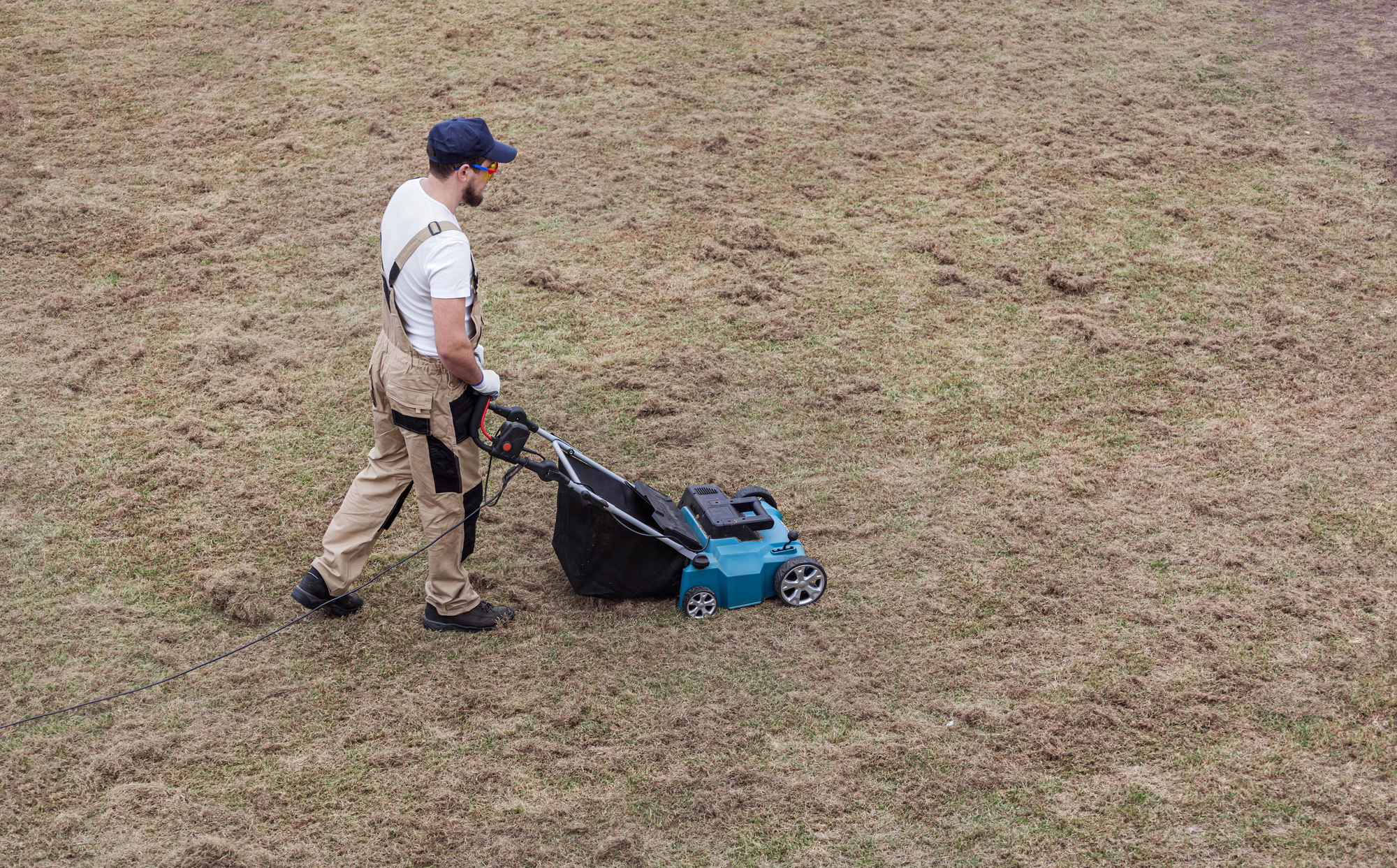
For a larger lawn, hand-raking a whole plot is hard, slow work. A powered electric or petrol scarifier (£60 to £150 / $80 to $190 to buy, or a few pounds or dollars an hour to hire) does the same job in a fraction of the time, with a depth dial so you can set the tines to skim rather than gouge. A scarifying cassette that clips into a cylinder mower is another route. If none of that appeals, rake one section of the lawn each autumn and rotate around the plot over a few years.
Expect the lawn to look thin and scruffy straight afterwards. That is normal and short-lived. The grass recovers within a few weeks and comes back denser for the clear-out.
What to do straight after scarifying
Two follow-up jobs turn a good rake into a genuine renovation, and early autumn is the ideal moment for both.
Aerate the soil. Push a garden fork (£15 to £30 / $20 to $40) into the lawn at 10 to 15cm (4 to 6in) spacings and drive it as deep as the tines will go, working it from side to side to open each hole. This relieves the compaction that builds up over a summer of footfall and mowing, and lets air and water travel down into the root zone. On heavy clay or a lawn that waterlogs, a hollow-tine aerator that pulls out plugs of soil works better than solid spikes. Sweep up the cores, then brush a sandy top dressing into the holes.
The RHS top-dressing recipe is worth having to hand: three parts sandy loam, six parts sharp sand and one part well-rotted compost, applied at 2 to 3kg per square metre (4 to 7lb per 10 square feet), which is roughly a shovelful at a time worked in with the back of a rake. It improves surface drainage and encourages denser rooting.
Overseed the thin spots. Freshly opened soil is the perfect seedbed, and early autumn soil is still warm from summer. Most lawn grasses germinate well while the soil sits around 8 to 13C (46 to 55F), which early autumn delivers. Scatter grass seed over the bare areas, rake it in lightly and keep the surface damp until it establishes. Our guide to repairing bare patches walks through seed rates and aftercare.
Feed only if the lawn is hungry. If the grass still looks weak after raking, an autumn lawn feed (£10 to £16 / $13 to $21) gives it a boost. Reach for a feed labelled specifically for autumn: these run low in nitrogen and higher in potassium and phosphorus, so they push root growth down into the winter rather than forcing soft, leafy top growth that the first frost would burn. A high-nitrogen summer feed at this time of year does more harm than good.
The mistakes that cost you a whole lawn
Leaving it too late. Rake past mid-autumn and the grass has stopped growing, so the bare, opened turf sits exposed and cold through winter. Moss colonises the gaps and the lawn goes backwards. Get the job done while the grass can still knit the holes closed.
Going too hard in one go. Stripping out every fibre of thatch and tearing the crowns leaves more soil showing than grass, and the recovery drags on for months. Thin the layer over one or two firm passes and stop.
Skipping the clear-up. Raked-out thatch and moss left lying on the surface re-mats within a fortnight, and the moss you just pulled seeds itself straight back in. Bag it or compost it the same day.
Doing nothing. This is the costly one. A mat thicker than 1cm keeps growing, sheds water and feed, breeds disease and thins the grass until you are looking at a re-turfing bill running to several hundred pounds or dollars, rather than an afternoon with a rake that costs little more than the price of the rake itself.
Early autumn scarifying is unglamorous, slightly tedious work, and it pays back all through the next year. Clear the thatch, open the soil, feed the roots if they need it, and the grass comes through winter tougher, thicker and greener than the neighbours who left theirs to choke.