
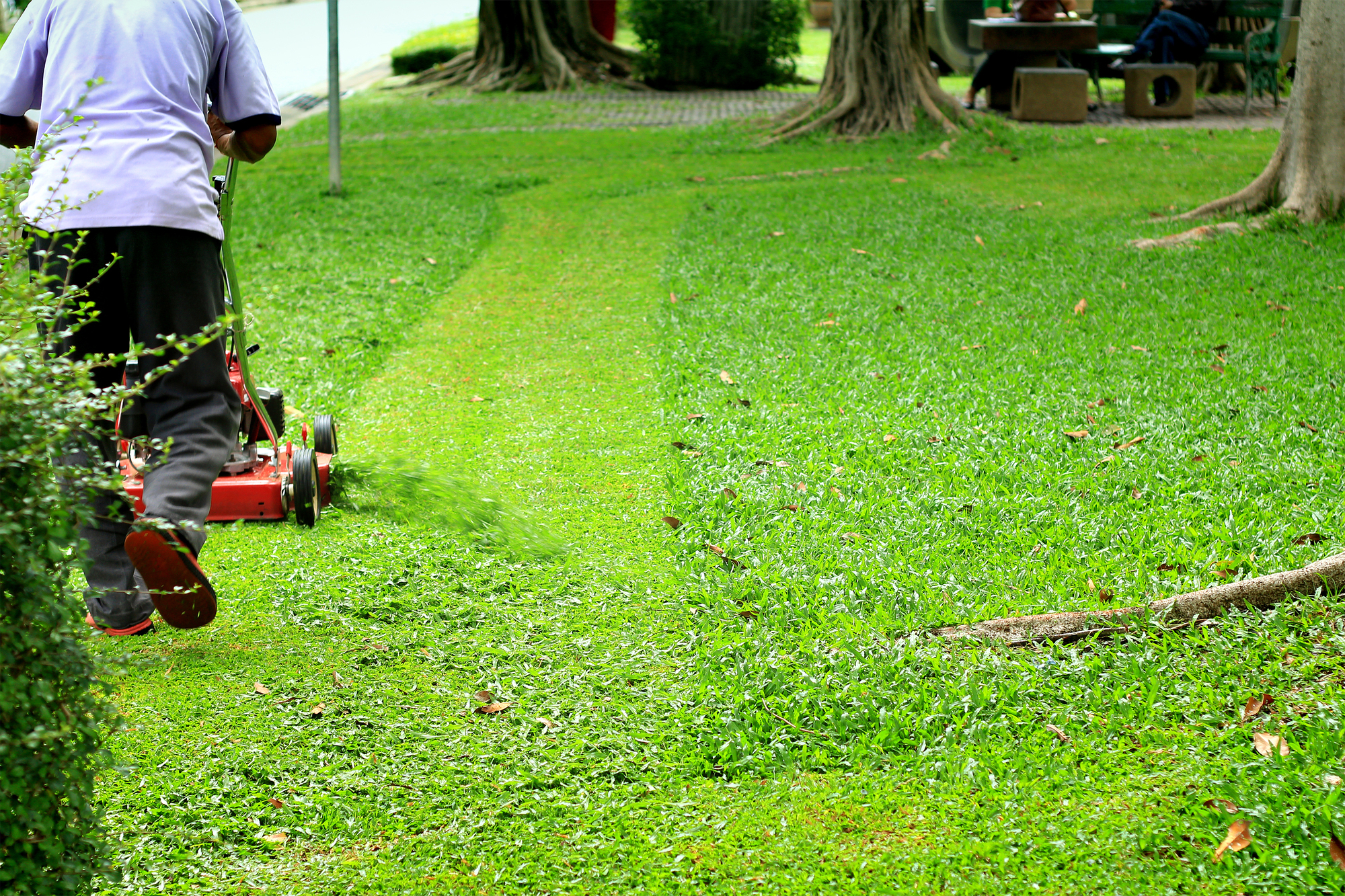
If your lawn shows two faint parallel tracks after every mow, or worse, soft grooves you can feel through your shoes, the mower wheels are pressing into ground that is too soft to carry their weight. Summer is the worst season for it, because a heavy thunderstorm soaks the soil overnight and then a bright morning tempts you out to mow while the ground underneath is still saturated. The fix is mostly about timing and varying where the wheels run, with tyre pressure and machine weight playing supporting roles. Get those right and the ruts stop forming. Leave them and the tracks deepen with every pass until they become permanent grooves that the mower then scalps, turning a cosmetic mark into bare, damaged turf.
Why ruts form, and why summer is the worst time
A rut is what happens when the weight of the mower, concentrated onto a couple of narrow wheels, presses down harder than the soil can resist. When the ground is firm and dry, the soil pushes back and the wheels simply roll over the top. When the ground is wet and soft, the soil particles compress and squeeze sideways instead, leaving a groove where the wheel passed and a band of compacted soil beneath it. That compaction is the part you cannot see but should care about most, because compacted soil has its air spaces crushed out, and grass roots starved of oxygen in that layer slow down and thin. This is why an old wheel track often shows up twice over, first as a dip you can feel and then as a yellowed, sparse line where the grass has struggled in the compressed soil below.
Summer turns this from an occasional nuisance into a weekly habit. Heavy summer downpours saturate the ground quickly, and the surface can look dry within hours while the soil a few centimetres down stays sodden. Mow on that deceptively dry looking surface and the wheels sink into the soft layer underneath. Heavier machines make it far worse, so ride on mowers and big petrol models do more damage than a light push mower, and the problem compounds when you follow the exact same line and direction every single week, hammering the same two strips of lawn until they give way. The combination of soft summer ground, a heavy mower and a repeated route is what carves ruts into a lawn that mowed perfectly well in spring.
How to stop ruts before they start
The first and most powerful change is timing. Wait until the soil is firm before you mow, and resist the urge to cut within a day or so of heavy rain while the ground is still soft underneath. A quick test settles it: walk across the lawn first, and if your feet sink in, the surface squelches, or your footprints stay pressed into the turf, the soil is too soft and the mower will rut it. If footprints spring back and the ground feels solid, you are clear to mow. The same firmness check that tells you a lawn is ready for water, set out in our guide to the footprint test, doubles as a quick read on whether the ground will carry a mower without damage.
The second change costs nothing and improves the lawn in several ways at once: vary your mowing pattern every time you cut. Mow up and down one week, across the next, and on a diagonal the week after, so the wheels never run the same line twice in a row and the pressure is spread across the whole lawn instead of two fixed strips. Varying the direction also stops the grass leaning permanently one way and gives a cleaner, more even cut. Pay attention to tyre pressure too. Set the tyres to the level the manufacturer recommends, because over inflated tyres put all the weight onto a narrow contact patch and dig in, while under inflated ones let the mower wallow and rut, and a correctly inflated tyre spreads the load as it was designed to. Where you have a choice of machine, a lighter mower with wider wheels treads far more gently on soft ground than a heavy one on narrow tyres, and emptying the grass box more often keeps that weight down rather than letting a full, heavy box add to the load.
Over the longer term, work on the ground itself so it carries weight better. Compacted, poorly drained soil both ruts more easily and drains more slowly, which keeps it soft for longer after rain, so relieving compaction breaks the cycle. Aeration opens the soil up and lets water move down and away, though timing matters and we explain why aerating in the heat of midsummer can do more harm than good, which makes autumn the better window for the job. Topdressing low or soft spots with a sandy mix gradually firms and levels them, improving both drainage and load bearing over a couple of seasons.
How to repair the ruts you already have
Shallow ruts, up to around 5cm (2 inches) deep, are simple to lift. Work along the track with a garden fork, pushing it in and gently easing it back to loosen the compacted soil and raise the sunken turf, then firm it lightly, water it, and let the grass recover. If the track is thin or bare, brush a sandy topdressing into the groove to fill it level and scatter a little grass seed to thicken it back up. Deeper ruts need the turf lifted. Slice along both sides of the rut with a spade, peel back the strip of turf like a flap, loosen and add soil underneath until the base sits at the right height, then lay the turf back down, firm it and water it in well. The principle either way is to lift the sunken turf and rebuild the soil beneath it to the correct level, rather than trying to press the groove flat, since rolling a rut only compacts the soil further and leaves the hollow underneath.
Repairs take best in the cooler, moister conditions of spring and autumn, when grass establishes fastest, so if you repair ruts during a hot summer keep the worked areas watered until the turf has knitted back together. The reason to act rather than ignore them is straightforward in its consequences. Each pass over an existing rut deepens it, the compacted strip below keeps thinning and yellowing, and once a groove is established the mower begins scalping the raised edges on either side, shaving the grass down to the soil and creating exactly the kind of bare, weak line that cutting at the right height is meant to prevent. A few minutes of fork work now, plus a habit of mowing only when the ground is firm and never along the same line twice, keeps a lawn flat, green and free of the tramlines that give away a mower run over soft summer ground.
The everyday habits that keep a lawn level
Most rutting comes down to a handful of routines that are easy to let slip during a busy summer. Build them in and the problem largely disappears. Check the ground before every cut rather than mowing on autopilot, because the same lawn can be firm one morning and soft the next after overnight rain. Change your starting point and direction each week so the wheels share the load across the whole surface. Keep the tyres at the right pressure as part of a quick pre mow glance, alongside checking the blade and the grass box. And be willing to skip a mow, or wait until the afternoon when the surface has dried, rather than forcing a cut on sodden ground just because it is the day you usually do it.
It also helps to think about the route the mower takes around obstacles. The tight turns at the end of every run, and the circles worn around trees, beds and washing lines, take the heaviest punishment because that is where wheels pivot, spin and pass most often. Vary those turning points, lift and reposition rather than spinning on the spot where you can, and give the worst worn areas a season of fork work and overseeding to recover. A lawn that is mowed only when the ground will bear it, on a route that keeps changing, on a machine that is no heavier than the job needs, stays flat and unmarked through the wettest summer, while the neighbour who mows on schedule regardless ends up reading their lawn like a set of tramlines by August.